Sustainable Manufacturing and Foundry Practices

1CSIR-Central Mechanical Engineering Research Institute, Durgapur, West Bengal, India
2Academy of Scientific and Innovative Research (AcSIR), Ghaziabad, Uttar Pradesh, India

This article is distributed under the terms of the Creative Commons Attribution-NonCommercial 4.0 License (https://creativecommons.org/licenses/by-nc/4.0/) which permits non-commercial use, reproduction and distribution of the work without further permission provided the original work is attributed as specified on the SAGE and Open Access page (https://us.sagepub.com/en-us/nam/open-access-at-sage).
Semi-solid metal processing offers a compelling alternative to conventional casting by enabling the production of alloys with superior, non-dendritic microstructures. Slurry flow dynamics, less porosity formation, higher die and tool life, and final mechanical characteristics are all controlled by primary phase morphology during partial solidification. This review presents a critical assessment of microstructural evolution and mathematical modelling of alloys during semi-solid processing. The observed interaction between solid fraction development, morphological changes, slurry rheology and various semi-solid slurry generation techniques is highlighted. Various techniques for generating non-dendritic structures are provided, covering their working principles, comparative advantages, limitations and effective processing windows. Experimental studies remain constrained in fully capturing microstructure-property relationships and the influence of critical processing parameters. To provide a comprehensive assessment, the latest advancements in volume-averaged solidification process modelling have been examined, with explicit discussion of why interface-tracking methods such as phase-field models and Eulerian-Lagrangian approaches fall outside the present scope. Current two-phase and three-phase solidification models are evaluated with respect to heterogeneous nucleation, solute redistribution, interfacial heat transfer, and inter-phase momentum coupling. Discrepancies between numerical predictions and experimental observations are discussed, particularly under conditions of high shear and non-uniform thermal fields. The review demonstrates that computational constraints continue to limit the prediction of nucleation kinetics and microscale features, especially for high-temperature, high-Si and multi-element alloy systems. Although several formulations demonstrate practical potential in laboratory and small-scale industrial castings, further progress requires improved calibration, consistent closure relations, benchmark validation, and expanded material databases capturing micro-macro interactions. Addressing scale-up requirements related to process stability, defect control, tool life and feedstock consistency remains critical for enabling reliable semi-solid processing on an industrial scale.
Semi-solid metal processing, microstructural evolution, non-dendritic structure, mathematical modelling, solidification
Introduction
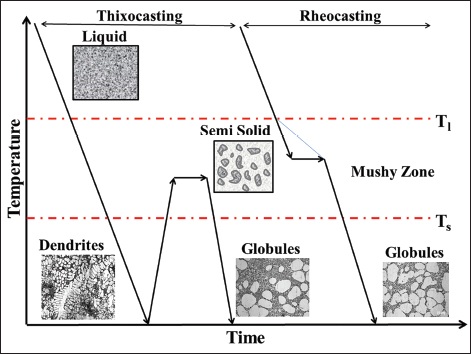
Dendritic microstructures produced by conventional casting are inherently associated with porosity, segregation and mechanical anisotropy. Shear forces are introduced to include the effect of these factors. The resulting enhanced fluid flow disrupts the solid-liquid boundary, fragmenting dendrites and generating a slurry. Instead of the typical dendritic structure submerged in liquid, this slurry consists of fragmented or spheroidised primary phase particles. Non-dendritic primary phase particles are detached and enclosed in a near-eutectic, lower-melting secondary phase once this slurry solidifies. Despite an increased solid fraction, the partially remelted non-dendritic microstructure presents substantially reduced flow resistance. This characteristic offers considerable potential for additional processing in the semi-solid state through forging, pressure die casting and thixoforming. The aforementioned idea serves as a foundation for the novel manufacturing technique known as semi-solid metal processing (SSMP), in which metal alloys are cast or formed in a semi-solid state (Flemings, 1991; Flemings et al., 1976; Spencer et al., 1972). Semi-solid processing is categorised into rheo-routes and thixo-routes, as explained in Figure 1 by their respective temperature-time trajectories during slurry generation and forming. The rheo-route generates a semi-solid slurry directly from the liquid melt through controlled cooling and shearing, producing near-net-shape products (Spencer et al., 1972). The slurry generation enables continuous, low-turbulence mould filling or forming operations in casting. The thixo-route comprises three steps: preparing a non-dendritic feedstock, reheating it to a semi-solid state and shaping the thixotropic mushy billet (Flemings et al., 1976). Over the last five decades, a wide range of SSMP techniques have been developed, including thixocasting and rheocasting, for manufacturing components critical to the aerospace, automotive and defence sectors. Processing alloys in semi-solid state minimises thermal stresses on moulds, results in reduced cycle times, extends tool life, along with economic and environmental benefits, such as low-cost feedstock, recyclability and reduced waste (Flemings et al., 1976).
A crucial step in the semi-solid processing of metals and their respective alloys is the meticulous preparation of slurries that exhibit non-dendritic microstructures, which, in turn, significantly enhance thixotropic flow characteristics during the forming processes (Fan, 2002; Tahamtan et al., 2009; Wang et al., 2011). Conventional casting and solidification inherently produce dendritic morphologies susceptible to porosity and brittleness (Cho & Kang, 2000). Semi-solid processing effectively disrupts dendritic growth through shear-induced fragmentation and particle spheroidisation (Jin, 2022; Qin & Wallach, 2003; Wu et al., 2004).
The formation of non-dendritic microstructures is fundamentally governed by mechanisms including dendrite fragmentation, plastic deformation and spheroidal growth, all of which are significantly influenced by shear intensity, cooling rate and the dynamics of flow within the material (Fadavi Boostani & Tahamtan, 2010; Ji, 2003; Mohammed et al., 2013). Various techniques for the generation of non-dendritic structures include non-shearing methods and shearing methods. Non-shearing techniques produce a semi-solid slurry with a non-dendritic microstructure via thermal cycling or solid-state deformation instead of mechanical stirring. A comprehensive review of the techniques used to generate non-dendritic structures in SSMP is presented in Section ‘Methods Used to Generate Non-dendritic Structures in Semi-solid Metal Processing’. Although experimental studies remain essential for understanding material processing and manufacturing technologies, numerical modelling and simulation have increasingly reduced the need for costly and complex experimental trials through advances in computational technology over the past several decades. Simulation-based process modelling has grown as a tool for predicting micro- and macroscale phenomena of solidification/melting, heat transfer, fluid flow and so on, providing key insights into the study of new process technologies while refining the current ones (Li et al., 2022; Ludwig et al., 2014, 2016; Wu et al., 2019). However, the underlying physical framework significantly impacts a numerical tool’s predictive capacity. Thus, it is crucial to comprehend the origin of praxis observation and to develop modelling formulations that accurately represent the relevant flow physics.
In this article, a comprehensive understanding of the processing parameters governing morphological evolution in SSMP is presented, along with relevant mathematical modelling and simulation approaches. Mathematical modelling and simulations provide further insight into microstructural evolution under shear deformation, continuous cooling and isothermal holding conditions. Consequently, microstructural growth kinetics and selected volume-averaged solidification models within this framework are discussed. This review explicitly excludes Eulerian-Lagrangian (E-L) and interface-tracking approaches such as phase-field methods; the rationale for this scope is discussed in the fourth section.
Microstructural Evolution in the Semi-solid State
Most commercially important metal alloys solidify with a dendritic morphology, developing either columnar or equiaxed dendritic structures. In both types, dendrites undergo significant evolution during solidification owing to ripening driven by surface energy minimisation. The structure becomes progressively coarser during solidification due to the remelting of dendrite arms with smaller radii. In castings and ingots undergoing dendritic solidification, multiple processes operate simultaneously in the semi-solid region, such as crystallisation, solute redistribution, ripening, interdendritic fluid flow and solid movement.
The developing dendritic structure is highly sensitive to convection during the initial stages of solidification. When convection is vigorous and cooling is slow, grains evolve into spheroidal forms, and the resulting alloys exhibit semi-solid rheological behaviour that differs substantially from that of fully dendritic alloys (Ji et al., 2022). Semi-solid slurries with non-dendritic microstructures can therefore be produced by solidification under forced convection. In mushy equiaxed solidification, the top surface settles fairly uniformly during the early stages; at this stage, grains remain free to move. Once the solid fraction reaches a critical value, grains interlock and mass feeding stops. Studies show that this network forms at a solid fraction of roughly 0.1-0.2, depending on dendrite size and morphology (Atkinson, 2010; Spencer et al., 1972). Flemings (1991) reported shearing small blocks of aluminium alloys isothermally and observed negligible strength below approximately 0.2 solid fraction. Above this level, shear strength increased with increasing solid fraction and rose slightly with a higher strain rate and larger grain size. In alloys with strong grain refinement, measurable strength did not appear until a solid fraction of approximately 0.4. Spencer et al. (1972) conducted similar tests on Sn-Pb alloy and demonstrated that continuous shearing during solidification dramatically alters rheological behaviour, transforming the alloy into a highly fluid, thixotropic slurry.
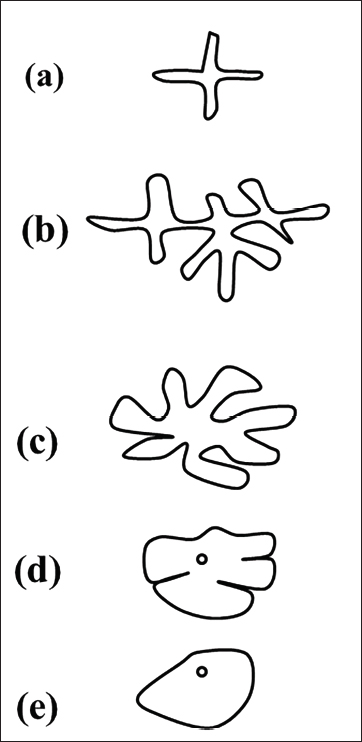
Deformation in semi-solid dendrites, up to about 0.9 solid fractions, primarily involves grain-boundary sliding and dendrite distortion. Microstructures show dendrite bending and liquid-filled spaces between grains. Initial stress increases due to more particle contacts, but at high strains, continuous fissures can open, causing stress to drop. Vigorous agitation during solidification initiates the formation of new grains, which then grow dendritically. Continued shear and solidification time transform the dendritic morphology into a rosette shape due to ripening, shear and abrasion (Figure 2). Further cooling perpetuates ripening, leading to spheroidal or ellipsoidal particles, often with entrapped liquid, especially under slow cooling and high-shear conditions. The size of individual grains (dendrites or rosettes) is moderately affected by the shear rate above a minimum value but strongly affected by the cooling rate during the initial stages of solidification (Flemings, 1991).
Mechanisms of Dendrite Fragmentation
Dendritic fragmentation is a widely accepted mechanism for altering the microstructure of semi-solid slurries during shearing. This phenomenon involves the breakdown of primary dendrites into smaller, more spherical particles, which is crucial for achieving a non-dendritic microstructure in SSMP (Ji, 2003). Three principal mechanisms have been proposed for dendrite-arm fragmentation: (a) break-off at the roots caused by shear forces, (b) remelting at the roots due to solute enrichment at high-curvature regions, and (c) bending induced by flow stresses, which generates internal boundaries through the accumulation of geometrically necessary dislocations. Subsequent wetting of high-angle, high-energy grain boundaries by the liquid phase ultimately results in dendrite detachment (Flemings, 1991). Figure 3 presents the schematic sequence for the fragmentation of a typical dendritic morphology and its transformation into a globular grain. A partially solidified dendrite (a) below the liquidus temperature may undergo plastic bending (b) under shear, producing a large misorientation through geometrically necessary dislocations (c). Bending occurs only when the surrounding fluid flows sufficiently faster than the grain. These dislocations store high elastic energy, which is lowered by the formation of a subgrain boundary. When the grain boundary energy exceeds twice the solid-liquid interfacial energy, the boundary is replaced by a thin liquid layer that subdivides the dendrite (Doherty et al., 1984).
The transformation from dendritic to spherical, non-dendritic grains in stirred melts, as described by Molenaar et al. (1986), is a multi-stage process involving initial fragmentation and bending due to shear forces, the formation of rosette structures through liquid entrapment and, finally, ripening of rosettes into spherical grains under high shear and turbulence (Balasubramani et al., 2023). Spheroidal particles, together with equiaxed and dendritic particles, constitute the microstructure of rheocast alloys. Their formation is primarily linked to the fragmentation-by-remelting mechanism, and their number density increases with rheocasting time until it stabilises due to particle sintering and coalescence (Canyook et al., 2010). The microstructural evolution of rheocast billets is strongly influenced by the initial processing parameters. Longer stirring durations and lower cooling rates promote higher particle sphericity at the billet centre, whereas higher cooling rates produce finer primary α phases (Zhang et al., 2003). The α phase referred to here is the primary aluminium-rich solid phase that nucleates heterogeneously on inoculant particles or active nucleation sites when the alloy is cooled below the liquidus temperature. Its nucleation is promoted by constitutional undercooling driven by solute rejection at the solid-liquid interface, and its morphology, dendritic, rosette or globular, is determined by the interplay between thermal and solute gradients, shear intensity and cooling rate.
Evolution of Non-dendritic Structures Under Shear
Vigorous agitation during solidification progressively transforms as-nucleated dendritic fragments into increasingly rounded morphologies through a sequence of overlapping mechanisms (Fan, 2002; Spencer et al., 1972). In the initial stage, the imposed shear field induces mechanical bending of primary dendrite arms and promotes fragmentation at the roots (Qin & Wallach, 2003). The fragments, once detached, are transported by convective flow throughout the mushy zone, where they act as additional nucleation substrates, thereby multiplying the grain population. As solidification continues under sustained shear, the fragmented particles evolve into rosette structures through liquid entrapment within concave inter-arm regions (Zhang et al., 2022). Prolonged shear and Ostwald ripening gradually smooth the surfaces of these rosettes, ultimately yielding spheroidal or near-spheroidal grains. The rate of this morphological transition is controlled by the combined influence of shear rate, solidification time and cooling rate (Flemings et al., 1976).
Methods Used to Generate Non-dendritic Structures in Semi-solid Metal Processing
A diverse range of techniques has been developed over the past five decades to generate non-dendritic microstructures in SSMP. These methods can be broadly categorised into mechanical agitation methods, electromagnetic and field-assisted methods, thermal-control-based methods and solid-state deformation methods. Each technique operates through distinct physical mechanisms and offers different advantages, limitations and processing windows. A systematic overview of the principal techniques used for slurry generation and microstructural modification is presented here.
Mechanical Stirring (Rheocasting).
Mechanical stirring is the earliest and simplest technique for generating semi-solid slurries and forms the basis of the original rheocasting process (Spencer et al., 1972). In this method, a rotating impeller or stirrer is immersed in the partially solidified melt to impose shear within the mushy region. Continuous shearing fragments dendrites and promotes their transformation into rosette and near-spherical globular morphologies through ripening and coarsening. The process is applicable to a wide range of Al, Mg, Cu and Sn-Pb alloys. Its main advantages include simple implementation, low capital cost, scalability and compatibility with conventional casting systems (Li et al., 2002). However, the process may suffer from non-uniform shear distribution, temperature inhomogeneity and gas entrapment under excessive turbulence (Brabazon et al., 2002). Mechanical stirring is generally effective at solid fractions below ~0.5, beyond which the resistance of the solid network hinders stirrer rotation (Kirkwood et al., 2010).
Electromagnetic Stirring.
Electromagnetic stirring (EMS) uses a time-varying magnetic field to generate Lorentz forces within the electrically conducting melt, producing rotational or axial convective flow without mechanical contact. The induced flow shears the mushy zone, fragments dendrites, homogenises temperature and solute fields, and promotes the formation of fine globular microstructures (Bai et al., 2009). The process offers contactless operation, reduced contamination, controllable stirring intensity, and improved grain refinement and macrosegregation control. Despite its advantages over mechanical stirring, EMS remains associated with several challenges, including the formation of partially spheroidised rosette structures and microstructural inhomogeneity across the billet cross-section, both of which may increase reheating times. Production costs are further elevated by the additional stages required for feedstock preparation, reheating before forming and recycling of non-dendritic scrap material (Mohammed et al., 2013). Stirring efficiency also decreases at higher solid fractions (~0.3-0.4) due to increased slurry viscosity and the development of a solid network. Additionally, non-uniform magnetic field distribution in complex mould geometries may result in heterogeneous microstructures (Bai et al., 2009).
Magnetohydrodynamic Stirring.
Magnetohydrodynamic (MHD) stirring is an advanced form of EMS that employs combined electric and magnetic fields to generate controlled three-dimensional flow within the solidifying melt. Unlike conventional EMS, MHD systems may use superimposed DC and AC fields, pulsed magnetic fields or multi-frequency coil arrangements to produce complex flow patterns (Vives, 1992). The induced Lorentz forces promote dendrite fragmentation, enhance temperature and solute homogenisation, and improve grain refinement. MHD provides a more uniform solid fraction distribution than conventional EMS. The technique offers contactless operation, programmable flow control, and improved thermal and compositional homogenisation. However, it involves significantly greater equipment complexity and a higher capital cost. MHD-cast alloys in the semi-solid state exhibit significant liquid-phase segregation and extensive agglomeration of solid grains compared with strain-induced melt activation (SIMA) and spray-cast alloys. Microstructures remain comparatively less equiaxed and display high rosette growth rates. These characteristics are attributed to differences in grain misorientation distribution introduced during processing (Tzimas & Zavaliangos, 2000).
Cooling Slope Method.
Cooling slope (CS) casting is a simple and low-cost semi-solid slurry preparation technique in which superheated molten metal flows over an inclined, cooled plate before solidifying in a mould (Haga & Kapranos, 2002). Rapid heat extraction at the slope surface promotes nucleation, while gravity-driven flow generates shear that detaches nuclei and transports them into the bulk melt, producing fine, near-spherical primary particles (Haga & Suzuki, 2001). Key process parameters include channel inclination, slope length, surface temperature and alloy superheat (Birol, 2009). The technique has been successfully applied to various magnesium and aluminium alloys. Major advantages include simple operation, low equipment cost and the ability to generate spheroidal primary phases. However, the process may suffer from porosity, oxide formation and solidified shell formation along the slope surface, which can affect slurry quality and microstructural uniformity (Deepak Kumar et al., 2014). Excessive superheat may remelt nuclei formed on the slope, whereas insufficient superheat can cause premature solidification. The method is therefore most suitable for high-fluidity alloys with relatively wide solidification ranges.
Spray Casting/Spray Deposition.
Spray casting or spray forming is a non-agitation feedstock production process in which liquid metal is atomised into fine droplets using high-velocity gas jets and deposited onto a cooled substrate (Grant et al., 2017). During atomisation, small droplets solidify rapidly, while larger droplets remain liquid, and intermediate droplets are deposited in a semi-solid state. The process has been applied to aluminium, magnesium, copper alloys, nickel superalloys and metal matrix composites. Major advantages include fine non-dendritic microstructures without mechanical stirring, low macrosegregation and the ability to produce near-net-shape preforms. However, the process involves high equipment and operating costs, overspray losses and challenges related to porosity and oxide control (Mohammed et al., 2013).
Swirled Enthalpy Equilibration Device Process.
The Swirled Enthalpy Equilibration Device (SEED) process is a semi-solid feedstock preparation technique based on eccentric swirling of molten metal within a metallic vessel to promote uniform heat extraction and non-dendritic slurry formation (Doutre et al., 2004). Initially, molten metal with low superheat is poured into a rotating vessel, where swirling flow promotes nucleation at the vessel surface while suppressing dendritic growth. The remaining liquid is subsequently drained, leaving a self-supporting semi-solid slug suitable for pressure forming. The enthalpy equilibration approach relies on controlled heat removal, primarily through the cooled crucible wall, and fluid motion through swirling to produce a fine, rosette-to-globular primary phase within a narrow solid fraction window (Gu et al., 2023). The SEED process has been applied commercially to the high-pressure die casting of automotive Al-alloy components. Dendrite fragmentation and controlled cooling during swirling promote the formation of globular microstructures. Stirring intensity and pouring temperature are the key parameters controlling the transition from dendritic to globular structures and the overall microstructural evolution (Doutre et al., 2004). The SEED process enables the on-demand production of semi-solid slurry with precise solid fraction control and low rotational speeds, thereby minimising gas entrapment. Its crucible-based configuration is also compatible with conventional die-casting systems. However, the process requires careful control of pouring temperature, swirling speed, superheat and cooling conditions to ensure consistent slurry quality. Radial temperature gradients within the crucible may lead to microstructural heterogeneity, while the liquid-draining step increases process complexity (Luo et al., 2019). The method is most effective for near-eutectic aluminium alloys with moderate solidification ranges, whereas alloys with high solidus temperatures or wide freezing ranges are more difficult to process reproducibly.
Strain-induced Melt Activation Process.
The SIMA process is a solid-state deformation route for producing non-dendritic feedstock suitable for thixoforming (Wang et al., 2011). In the SIMA process, a cast alloy billet is first subjected to heavy plastic deformation to introduce a high density of dislocations and stored strain energy. The deformed billet is then reheated into the semi-solid temperature range, where partial melting promotes recrystallisation and liquid penetration along high-energy grain boundaries (Bolouri et al., 2010). This isolates the recrystallised grains and produces a fine, near-spherical primary phase surrounded by liquid, making the microstructure suitable for thixocasting and thixoforging. However, the process requires an additional deformation step before reheating, increasing processing complexity and cost. Careful control of deformation and reheating conditions is necessary to ensure uniform recrystallisation and grain separation. The method is most suitable for wrought aluminium and magnesium alloys and is less effective for alloys with wide solidification ranges or poor workability (Czerwinski, 2020).
Recrystallisation and Partial Melting Process.
The recrystallisation and partial melting (RAP) process is similar to SIMA but employs warm or hot working to introduce stored deformation energy before reheating into the semi-solid range. During partial remelting, recrystallisation and liquid penetration along grain boundaries produce fine, near-spherical grains surrounded by liquid (Jiang et al., 2016). Compared with SIMA, RAP generally provides faster recrystallisation kinetics and more uniform microstructures, particularly in larger billets. The process reduces the risk of deformation-induced cracking and is suitable for alloys with limited cold workability. However, it requires controlled warm working conditions and careful regulation of deformation and temperature to retain sufficient stored energy for recrystallisation. RAP is most effective for wrought aluminium and is less suitable for brittle cast alloys that cannot undergo substantial solid-state deformation. Also, non-uniform strain in large billets leads to a heterogeneous semi-solid microstructure (Wang et al., 2017).
Direct Partial Remelting.
Direct partial remelting (DPRM) is a thixo-route process in which a grain-refined cast billet is reheated directly into the semi-solid temperature range without prior deformation. During isothermal holding, partial melting promotes spheroidisation through Ostwald ripening and grain boundary migration, producing near-spherical solid grains suitable for thixoforming (Omar et al., 2011). The process typically operates at solid fractions of 0.4-0.6, and the final microstructure strongly depends on the initial grain size and morphology of the feedstock. In this method, the as-received material is reheated directly into the semi-solid range without requiring conventional feedstock preparation routes such as SIMA or RAP (Mohammed et al., 2013). This simplifies processing and broadens the range of materials and processing pathways available for producing thixoformable microstructures. However, precise temperature control and uniform heating are essential to avoid excessive grain coarsening, while the process remains highly dependent on the quality of the initial grain-refined billet. Coarse- or columnar-grained feedstocks are generally unsuitable for this method (Ji et al., 2022).
Ultrasonic Vibration Treatment.
Ultrasonic vibration treatment introduces high-frequency acoustic waves into the solidifying melt through a sonotrode, generating acoustic cavitation and acoustic streaming (Jian et al., 2005). Cavitation causes the formation and collapse of microbubbles, producing intense localised pressure pulses and microjets that fragment dendrite arms, while acoustic streaming enhances convective mixing, homogenises temperature and solute fields, and distributes the fragments throughout the melt. The process provides effective grain refinement, promotes degassing and oxide removal, and can be applied without major modifications to existing equipment. However, sonotrode erosion, limited acoustic penetration depth and sensitivity to probe positioning restrict large-scale application (Jiang et al., 2014). Ultrasonic treatment is most effective during the early stages of solidification at low solid fractions, as the developing solid network rapidly attenuates acoustic propagation and reduces cavitation activity.
Gas-induced Semi-solid Process.
The gas-induced semi-solid (GISS) process produces a semi-solid slurry by injecting inert gas through a porous graphite diffuser immersed in the melt near the liquidus temperature (Wannasin et al., 2010). Rising gas bubbles generate localised shear and convective flow that fragment dendrites and distribute the fragments throughout the melt, while simultaneous heat extraction from the injected gas promotes undercooling and nucleation. The GISS route is suitable for processing different types of alloys, such as zinc alloys, cast aluminium alloys, wrought aluminium alloys and die casting aluminium alloys (Mohammed et al., 2013). The process integrates stirring and cooling in a compact, low-cost setup compatible with conventional casting systems, while the inert atmosphere also helps reduce oxidation. However, gas entrapment, non-uniform shear distribution and graphite tip erosion remain important challenges. The method is most effective at low-to-moderate solid fractions, as increasing solid content reduces bubble mobility and convective efficiency. Techniques such as ultrasonic vibration, SIMA and inert gas purging are not industrially viable at high solid fractions, further highlighting the processing niche of GISS (Gautam et al., 2025).
Effect of Processing Parameters on Microstructure
The viscosity and structural evolution of semi-solid metal slurries are significantly influenced by shear rate and cooling rate, leading to pseudoplastic and thixotropic behaviours. The viscosity of semi-solid metal slurries is highly dependent on both shear rate and cooling rate, with an increasing shear rate and a decreasing cooling rate leading to lower viscosity (Fan, 2002). This is partly due to the formation of denser, more rounded particles that move more easily. Such slurries exhibit pseudoplasticity (viscosity decreases with increasing shear rate) and thixotropy (time-dependent viscosity changes as the material structure builds up or breaks down). This structural evolution, driven by shear and cooling, ultimately governs the rheological properties of the material. Tzimas and Zavaliangos (2000) reported the effects of cooling rate, shear rate and isothermal coarsening on the microstructure of alloys in the semi-solid state. Shearing significantly reduces flow resistance and viscosity by breaking bonds within the solid network. The cooling rate controls solidification kinetics and grain refinement, with higher rates producing finer, more uniform α-phase grains and lower segregation. Isothermal holding determines grain growth and spheroidisation through ripening, where grains become more equiaxed as soaking time and liquid fraction increase. The grain growth rate constant depends on the liquid volume fraction and coalescence kinetics. Ji and Fan (2002) investigated the effect of shearing during solidification under continuous cooling and isothermal conditions using a twin-screw process in Sn-15 wt% Pb alloy. A low shear rate of 500 s-1 produced mainly rosette grains, while higher shear rates generated spherical, non-dendritic grains with narrow size distributions. At high shear, the transition from dendritic to rosette or spherical forms occurs through liquid entrapment within the rosette. Increasing the shear rate and turbulence shifts the morphology from equiaxed dendrites to rosettes and then to spheroids. Vigorous convection causes necking and remelting of dendrite arms, accelerating this transformation. Koke and Modigell (2003) discussed the significant influence of both cooling rate and shear rate on the microstructure and rheological properties of semi-solid metal alloys. The average particle size of the globular grains was observed to increase with a decreasing cooling rate and an increasing shear rate. Experiments conducted at three shear rates (100, 200 and 400 s-1) with a constant cooling rate (-4 °C/min) confirmed that particle diameters increased with higher shear rates. The rheological behaviour was found to be shear-thinning at steady state, with a transient overshoot (shear-thickening) observed immediately after shear-rate increases. Rapid changes in shear rate induce structural breakdown or recovery, leading to transient shear stress and viscosity responses fundamentally linked to the time-dependent agglomeration and deagglomeration of solid particles within the liquid matrix. Liu et al. (2003) further explain the rheological behaviour of a semi-solid Sn-15% Pb alloy under rapid shear-rate changes relevant to thixoforming processes. Shear-rate increases trigger swift structural breakdown and a subsequent gradual viscosity decrease. Recovery upon shear-rate reduction takes longer than breakdown. Both initial and final shear rates influence the transient behaviour, which is closely tied to microstructural changes, including particle agglomeration and particle size evolution. High turbulence and increased shear rates primarily lead to the beneficial transformation of particle morphology from dendritic to spherical, enhance solute penetration and accelerate solidification, although they do not necessarily improve interface stability (Fan, 2002; Qin & Wallach, 2003). Understanding and controlling these parameters are essential for successful industrial applications and accurate computational modelling (Ji & Fan, 2002). Effective semi-solid processing, especially thixoforming, relies heavily on understanding and precisely controlling process parameters such as shear rate, temperature and die design. The transient rheological behaviour of the material under these conditions is a key factor for both experimental investigation and computational modelling to ensure high-quality products and efficient manufacturing.
Volume-averaged Transport Phenomena in Solidification Processes: Scope and Rationale
Scope of the Review and Exclusion of Phase-field and Eulerian–Lagrangian Methods
Before presenting the volume-averaged framework, it is necessary to clarify why two prominent classes of solidification models, phase-field methods and E-L approaches, fall outside the scope of this review. This is not a reflection of their scientific merit, but rather a recognition that their computational demands and characteristic length scales differ fundamentally from those of the volume-averaged approach discussed here. The E-L method follows individual solid particles (Lagrangian) in a continuous liquid phase (Eulerian). The E-L technique is effective for diluted particle-laden flows, but it proves computationally challenging for SSMP since solid volume percentages typically fall between 0.3 and 0.5, necessitating the tracking of massive amounts of interacting particles. Additionally, the natural consideration of phase transition and solidification physics required for predicting morphological evolution is absent from the method. Phase-field models are very useful for comprehending dendritic morphology and microsegregation because they resolve the solid-liquid interface at the mesoscale. However, these are inappropriate for the macroscale casting models pertinent to SSMP process design, though, because their computing cost limits domain sizes to the microscale. Hence, volume-averaged, continuum-scale formulations that are computationally tractable for engineering-scale predictions are the main topic of this review. Phase-field models resolve the solid-liquid interface explicitly, tracking its position through a diffuse interface parameter that varies smoothly between bulk phases. Coupled with convective flow, as demonstrated by Beckermann et al. (1999), phase-field models can capture dendritic growth morphology, anisotropy and solute trapping with great fidelity. The scale (δ ~10-1-10-3 mm) is orders of magnitude smaller than the macroscopic casting dimension (~102-103 mm). Resolving the interface over a full engineering casting geometry would require computational meshes of prohibitive size. Furthermore, phase-field simulations of solidification under convection are typically restricted to two-dimensional domains or small three-dimensional volumes, limiting their direct applicability to industrial process optimisation. For these reasons, while phase-field models provide invaluable insight into mesoscale solidification physics, they are excluded from the present macroscale-focused review.
E-L methods treat the liquid melt as a continuous Eulerian field and track each solid particle, crystal, or grain individually as a Lagrangian entity. This approach is powerful for capturing particle-level dynamics such as sedimentation, clustering and individual grain growth trajectories. Cellular Automata approaches effectively capture mesoscale phenomena such as grain growth kinetics, crystallographic orientation, and the columnar-to-equiaxed transition (CET) across various solidification and manufacturing processes (Dreelan et al., 2022; Staroselsky et al., 2024; Zhi et al., 2024). However, the computational cost scales with the number of tracked particles, and in industrial castings where grain densities may reach 1010-1014/m-3, full Lagrangian tracking is computationally prohibitive. Moreover, the feedback between individual grain trajectories and the evolving macroscopic flow field (two-way coupling) introduces substantial numerical complexity. Volume-averaged (Eulerian-Eulerian) frameworks overcome this limitation by representing the solid phase as a continuum, making them tractable for engineering-scale simulations while retaining statistical descriptions of grain number density, size and morphology. The present review therefore focuses exclusively on volume-averaged formulations.
General Transport Framework
The volume-averaged approach describes each phase α (liquid, solid, columnar, equiaxed) through conservation equations for mass, momentum, energy and species. For a generic transported quantity Φα, the volume-averaged conservation equation takes the form:
Here, is the volume fraction of phase its density, the effective diffusivity and a source term that accounts for inter-phase exchange. The pressure gradient force is incorporated as a component of the momentum source term. Physical quantities are most naturally expressed as mass-weighted (Favre-averaged) values, related to volume-weighted quantities through the phase density. For mass conservation , the source term represents the net inter-phase mass transfer due to solidification or remelting. For momentum encompasses the drag force, buoyancy and solidification-induced momentum exchange. For energy (, specific enthalpy), includes the latent heat release and inter-phase heat transfer. For the solute species (, solute concentration), accounts for solute redistribution at the solid-liquid interface. The distinguishing feature of different volume-averaged solidification models lies in how they formulate the closure laws, that is, the expressions for inter-phase exchange terms (mass transfer rate Ṁ, momentum drag M, heat flux Q and solute exchange J). These terms are not computed explicitly at the microscale but are modelled through constitutive relations that encode the assumed grain morphology, growth kinetics and interfacial conditions. The following sections describe how these closure laws differ between the two-phase globular equiaxed model and the three-phase columnar-equiaxed model.
Modelling Examples
Modelling Equiaxed Solidification via a Two-phase Approach (Non-dendritic)
Equiaxed microstructures are prevalent in the solidification of industrial alloys, particularly those refined by inoculants to produce a fine, near-spherical crystal morphology. In the mathematical model, grain morphology is approximated as spherical, and diffusion around the globular structure dictates growth dynamics. Ni and Beckermann (1991, 1993) originally developed the two-phase solidification model for globular equiaxed solidification. Ludwig and Wu (2002) and Wu et al. (2003a) subsequently extended this model to update several closure laws. Further refinements were made by Wu et al. (2013, 2014), Wu and Ludwig (2006, 2007), Bedel et al. (2015) and Heyvaert et al. (2017) by accounting for inoculant transport.
Closure Laws and Inter-phase Exchange Terms
The key inter-phase exchange terms in the two-phase globular equiaxed model are the solidification rate (kg m-3 s-1), the inter-phase momentum drag (N m-3), the inter-phase heat transfer (W m-3) and the solute exchange (kg m-3 s-1 of solute). These terms couple the solid and liquid phase conservation equations. The solidification rate is the crucial quantity from which all other solidification-induced exchange terms are derived. It is evaluated from the solid-liquid interfacial energy balance:
where is the solid volume fraction, the solid density, L the latent heat, the inter-phase heat transfer coefficient per unit interfacial area and the external thermal source. Once is known, the inter-phase solute exchange C is obtained from the lever rule or Scheil-type conditions applied at the solid-liquid interface, accounting for the impingement factor that reduces the effective interfacial area at high solid fractions:
where is the solute concentration at the solid-liquid interface. The impingement factor accounts for the overlap of diffusion fields between neighbouring grains and can be treated as a function of solid fraction or approximated as (Wu et al., 2013, 2014).
The equiaxed grain radius is related to the grain number density n by the geometric relation: . The system of four transport equations (mass, momentum, energy and species for each phase) contains four primary unknowns: the phase volume fractions , the phase velocities uα, the temperature T (assuming local thermal equilibrium between phases: ) and the solute concentrations. The assumption of local thermal equilibrium is standard in most two-phase models for alloys with moderate cooling rates, as the inter-phase heat transfer is rapid relative to the solidification timescale. Under this assumption, the energy equations for both phases can be combined into a single mixture enthalpy equation, reducing the number of unknowns. Once T is known from the mixture energy equation, the remaining inter-phase exchange terms M, Q and C are computed using the known solidification rate and the grain evolution equation. If the effect of turbulent flow must be accounted for, the diffusion length scale used in computing Q and C must be adjusted using turbulent diffusivity correlations (Ni & Beckermann, 1993).
Nucleation Model.
For the majority of engineering alloys, heterogeneous nucleation on inoculant particles governs the equiaxed grain population. An initial number density n0 of inoculant particles (embryos) is present in the parent melt; undercooling progressively activates these as equiaxed nuclei. The nucleation rate, which has a Gaussian distribution function of undercooling, can be estimated by the source term . The nucleation parameters, and , can be ascertained through experimentation (Ahmadein et al., 2009; Wang & Beckermann, 1996). Since the solid phase is regarded as a pseudofluid, the associated momentum conservation equation must be solved by defining the solid phase’s viscosity, , which is brought about by interactions between individual equiaxed grains. Ishii and Zuber (1979) demonstrated that the viscosity of a solid/liquid combination is equal to . The viscosity of the solid phase is obtained as follows, considering that the mixing rule (Beckermann et al., 1999) is applicable here. A packing limit with a significantly smaller solid volume percentage (e.g., 0.2) can be implemented to simulate the coalescence of dendritic crystals (Combeau et al., 2009; Li et al., 2012). Other calculation techniques need to be taken into account for the turbulent flow (Acharya & Moukalled, 1989; Henkes & Hoogendoorn, 1994; Lipton et al., 1984; Ni & Beckermann, 1993).
Implementations of the Globular Equiaxed Solidification Model
Ni and Beckermann (1993) performed the first simulation using the globular equiaxed solidification model to study crystal sedimentation. Their exploratory two-phase flow simulation demonstrated the coupled interaction between local crystal growth dynamics and grain arrangement, enabling quantitative correlations between sedimentation-induced solidification outcomes (grain size distribution and macrosegregation) and processing parameters (temperature, constitutional undercooling) for the first time. A two-dimensional domain of Al-4.0 wt% Cu alloy was simulated under side and bottom cooling (Ludwig & Wu, 2002; Wu et al., 2003a). Results at 80 s reveal that nucleation and solidification commence along the die wall. A portion of the grains is carried to the central region by melt flow, while others sink and settle at the bottom corners. The coupling of inter-phase momentum exchange drives the formation of two counter-rotating vortices: one clockwise in the right half and one anticlockwise in the left half of the domain. The flow is primarily driven by crystal sedimentation and sedimentation-induced melt convection, though thermo-solutal convection also contributes. Later work extended the globular equiaxed solidification model to study: globular equiaxed crystal formation during channel cooling of A356 aluminium alloy (rheocasting/cooling slope) (Ahmadein et al., 2009; Wang et al., 2005); macrosegregation and breakdown during monotectic solidification (Wu et al., 2003b, 2005); the onset of solidification during mould filling in form casting (Wu et al., 2018); and macrosegregation caused by crystal sedimentation in steel ingots (J. Li et al., 2014; Li et al., 2012; Tu et al., 2014). Validation against laboratory casting experiments for mixed columnar equiaxed solidification has been reported by Wu et al. (2003b) and Wu and Ludwig (2006).
Modelling the Columnar-to-equiaxed Transition
A mixed columnar-equiaxed microstructure is the most common as-cast structure in commercial castings. During solidification, columnar crystals grow preferentially along the thermal gradient from the mould wall, while equiaxed grains nucleate in the undercooled bulk melt and may be advected by convection. Because columnar and equiaxed crystals differ fundamentally in their mobility, that is, columnar crystals are immobile or grow at a prescribed velocity, while equiaxed crystals are free to move, they must be treated as distinct phases in the model, even though both represent the same solid phase from a thermodynamic standpoint. The three-phase model for CET was originally developed by Wu and Ludwig (2006, 2007). It extends the two-phase equiaxed model of Section ‘Modelling Equiaxed Solidification via a Two-phase Approach (Non-dendritic)’ by adding a columnar phase, bringing the total to three phases: liquid, columnar solid and equiaxed solid. The columnar tip advancement is described by the Lipton-Glicksman-Kurz (LGK) model (Lipton et al., 1984), which predicts the columnar tip velocity and tip radius as functions of local undercooling. The equiaxed solidification sub-model is identical to that described in Section ‘Modelling Equiaxed Solidification via a Two-phase Approach (Non-dendritic)’. The columnar-to-equiaxed transition (CET) is predicted using Hunt’s blocking criterion (Hunt, 1984). The transition from columnar to equiaxed growth occurs when the volume fraction of equiaxed grains ahead of the columnar tip front exceeds a critical threshold (typically 0.49), at which point the equiaxed grains mechanically block further columnar advances.
Boussinesq Approximation and Density Treatment.
Grain sedimentation and thermo-solutal convection are modelled using the Boussinesq approximation (Li et al., 2014; Wu & Ludwig, 2006, 2007) in which the density is treated as constant in all terms of the Navier-Stokes equations except for the gravitational body force term. In the buoyancy term, density variations are linearised as:
where and are the thermal and solutal expansion coefficients, respectively, is the reference density, and are the reference temperature and concentration, respectively. This approximation is valid when density variations are small, a condition generally satisfied in Al-alloy systems over typical solidification temperature ranges. The Oberbeck-Boussinesq approximation decouples the flow equations from the energy and species equations except through the buoyancy source term, greatly simplifying the numerical solution. Because the liquid and solid have different densities, the shrinkage-driven feeding flow is handled separately: in open-domain continuous casting, hot melt enters at the inlet; in closed-domain ingot or form castings, a shrinkage cavity must be fed by an additional gas or slag phase (Wu et al., 2017).
Implementations of the Columnar-to-Equiaxed Transition Model.
The three-phase CET model of Wu and Ludwig (2006, 2007) was first applied in an exploratory simulation of a scaled-down model ingot to demonstrate mixed columnar-equiaxed solidification. Heat transfer controls the overall solidification sequence, but melt convection and grain sedimentation exert a significant influence on the final as-cast structure. When the surface temperature falls below the liquidus temperature, solidification commences with the formation of the columnar phase at the mould wall. Equiaxed grains nucleate in the undercooled melt, and melt convection transports them towards the mould wall, where they sink. Sinking crystals drag the melt downwards along the walls, generating a rising melt flow in the casting centre. Thermal-solutal buoyancy further modifies the overall convection pattern. As solidification proceeds, the columnar phase volume fraction increases at the mould wall, while equiaxed grains continue to nucleate, grow and sink along the columnar tip front until the CET occurs. The model was subsequently extended for industrial ingots (Wu et al., 2017), incorporating the formation of shrinkage cavities and dendritic equiaxed crystal morphology as significant additions. It was noted that the prior assumption of an ideal globular equiaxed grain morphology tends to overestimate macrosegregation (Wu & Ludwig, 2006, 2007), highlighting the importance of morphological fidelity in closure laws.
Comparison of Solution Techniques
| Method | Description | Advantages | Limitations | Best For |
| Finite volume method (FVM) | Integral conservation on control volumes | Conserves flux; robust for complex geometry | Numerical diffusion on unstructured grids | Melt flow, macro-heat transfer |
| Finite element method (FEM) | Variational formulation on elements | Handles irregular domains; good for solid mechanics coupling | Computationally intensive for large 3D domains | Thermomechanical coupling in solidification |
| Lattice Boltzmann method (LBM) | Mesoscale; velocity distribution functions | Natural for complex interface topology; parallelisable | Not yet scalable for full industrial casting domains | Dendritic growth at mesoscale |
| SIMPLE/SIMPLER algorithms | Pressure–velocity coupling for incompressible flow | Widely validated; efficient for steady-state problems | Convergence issues in high-solid-fraction mushy zones | Inter-dendritic and mould-filling flow |
| Phase-field method | Diffuse-interface formulation with order parameter φ | Resolves solid–liquid interface without explicit tracking | Restricted to microscale domains (mm3); high computational cost | Dendrite morphology, microsegregation |
Volume-averaged solidification models can be solved using several numerical approaches, each carrying distinct advantages and limitations depending on the application:
Future Scope
Research is largely focused on conventional Al, Mg and Sn-Pb alloys, while semi-solid processing of high-temperature alloys, high-Si-content alloys and lightweight multi-element alloys remains less explored, with emphasis on understanding their fragmentation and spheroidisation kinetics. Further work is also needed to improve energy efficiency, cycle time, tool life, defect suppression, process stability, automation, feedstock consistency and integration with existing manufacturing systems to enable reliable large-scale industrial production. Integrating physics-based models with machine learning or statistical inference can improve the prediction of particle morphology, slurry behaviour and defect formation while reducing computation time, provided that proper validation is ensured. In addition, many closure laws used in volume-averaged models still require refinement through targeted experimental studies on fluid-solid interactions during solidification, especially at intermediate solid fractions. Model validation should increasingly rely on controlled laboratory benchmark experiments rather than only engineering castings, as this allows individual closure laws and physical assumptions to be isolated and tested more effectively. Finally, advancing integrated micro-macro property modelling will require more extensive material input data beyond traditional approaches.
Conclusion
Shear rate, cooling rate and isothermal holding are the dominant parameters governing the transition from dendritic to non-dendritic microstructures in SSMP. Their combined influence controls dendrite fragmentation, spheroidisation, grain growth, slurry viscosity and the overall thixotropic behaviour essential for effective rheocasting and thixocasting. The comparative analysis of stirring methods reveals that each technique has a distinct and limited processing window defined by its effective solid fraction range, shear intensity and scalability. These constraints must be matched to alloy solidification kinetics for optimal microstructure control.
Accurate modelling and simulation of SSMP are necessary because they provide a practical approach to predicting microstructural evolution, such as fragmentation, spheroidisation and rheological transitions, without relying on repetitive experiments. Volume-averaged Eulerian-Eulerian multi-fluid frameworks, reviewed here, are the appropriate engineering-scale tools for this purpose. Several significant advancements have been made over the past two decades: (a) solidification models accounting for mixed columnar-equiaxed structure growth; (b) refinement of equiaxed crystal morphology descriptions; and (c) application of models to shrinkage cavity and macro segregation phenomena.
Further research directions include designing specific laboratory benchmark experiments for model validation, providing more reliable processing parameters and material data, improving closure laws through targeted experimental studies, incorporating turbulence models into multiphase flow frameworks and developing hybrid physics-machine-learning (ML) approaches to accelerate computation. As computing power increases, the industrial applicability of these models will become increasingly feasible.
The authors declared no potential conflicts of interest with respect to the research, authorship and/or publication of this article.
The authors received no financial support for the research, authorship and/or publication of this article.
Acharya S., & Moukalled F. H. (1989). Improvements to incompressible flow calculation on a nonstaggered curvilinear grid. Numerical Heat Transfer, Part B: Fundamentals, 15(2), 131–152. https://doi.org/10.1080/10407798908944897
Ahmadein M., Pustal B., Berger R., Subaši? E., & Bührig–Polaczek A. (2009). Grain nucleation parameters for aluminum alloys: Experimental determination and model validation. Metallurgical and Materials Transactions A: Physical Metallurgy and Materials Science, 40(3), 646–653. https://doi.org/10.1007/s11661–008–9738–4
Atkinson H. V. (2010). Semisolid processing of metallic materials. Materials Science and Technology, 26(12), 1401–1413. https://doi.org/10.1179/026708310X12815992418012
Bai Y.–L., Xu J., Zhang Z.–F., & Shi L.–K. (2009). Annulus electromagnetic stirring for preparing semisolid A357 aluminum alloy slurry. Transactions of Nonferrous Metals Society of China (English Edition), 19(5), 1104–1109. https://doi.org/10.1016/S1003–6326(08)60414–8
Balasubramani N., Venezuela J., StJohn D., Wang G., & Dargusch M. (2023). A review of the origin of equiaxed grains during solidification under mechanical stirring, vibration, electromagnetic, electric–current, and ultrasonic treatments. Journal of Materials Science and Technology, 144, 243–265. https://doi.org/10.1016/j.jmst.2022.09.067
Beckermann C., Diepers H. J., Steinbach I., Karma A., & Tong X. (1999). Modeling melt convection in phase–field simulations of solidification. Journal of Computational Physics, 154(2), 468–496. https://doi.org/10.1006/jcph.1999.6323
Bedel M., Tveito K. O., Založnik M., Combeau H., & M’Hamdi M. (2015). A model study of the impact of the transport of inoculant particles on microstructure formation during solidification. Computational Materials Science, 102, 95–109. https://doi.org/10.1016/j.commatsci.2015.01.028
Birol Y. (2009). Solid fraction analysis with DSC in semi–solid metal processing. Journal of Alloys and Compounds, 486(1–2), 173–177. https://doi.org/10.1016/j.jallcom.2009.06.165
Bolouri A., Shahmiri M., & Cheshmeh E. N. H. (2010). Microstructural evolution during semisolid state strain induced melt activation process of aluminum 7075 alloy. Transactions of Nonferrous Metals Society of China, 20(9), 1663–1671. https://doi.org/10.1016/S1003–6326(09)60355–1
Brabazon D., Browne D. J., & Carr A. J. (2002). Mechanical stir casting of aluminium alloys from the mushy state: Process, microstructure and mechanical properties. Materials Science and Engineering A, 326(2), 370–381. https://doi.org/10.1016/S0921–5093(01)01832–9
Canyook R., Petsut S., Wisutmethangoon S., Flemings M. C., & Wannasin J. (2010). Evolution of microstructure in semi–solid slurries of rheocast aluminum alloy. Transactions of Nonferrous Metals Society of China (English Edition), 20(9), 1649–1655. https://doi.org/10.1016/S1003–6326(09)60353–8
Cho W. G., & Kang C. G. (2000). Mechanical properties and their microstructure evaluation in the thixoforming process of semi–solid aluminum alloys. Journal of Materials Processing Technology, 105(3), 269–277. https://doi.org/10.1016/S0924–0136(00)00577–X
Combeau H., Založnik M., Hans S., & Richy P. E. (2009). Prediction of macrosegregation in steel ingots: Influence of the motion and the morphology of equiaxed grains. Metallurgical and Materials Transactions B: Process Metallurgy and Materials Processing Science, 40(3), 289–304. https://doi.org/10.1007/s11663–008–9178–y
Czerwinski F. (2020). Strain induced melt activation (SIMA): Original concept, its impact and present understanding. International Journal of Cast Metals Research, 33(4–5), 157–164. https://doi.org/10.1080/13640461.2020.1801561
Deepak Kumar S., Mandal A., & Chakraborty M. (2014). Cooling slope casting process of semi–solid aluminum alloys: A review. International Journal of Engineering Research & Technology (IJERT), 3(July), 269–283.
Doherty R. D., Lee H., & Feest E. A. (1984). Microstructure of stir–cast metals. Materials Science and Engineering, 65(1), 181–189.
Doutre D., Hay G., Wales P., & Gabathuler J.–P. (2004). Seed: A new process for semi–solid forming. Canadian Metallurgical Quarterly, 43(2), 265–272. https://doi.org/10.1179/cmq.2004.43.2.265
Fadavi Boostani A., & Tahamtan S. (2010). Effect of a novel thixoforming process on the microstructure and fracture behavior of A356 aluminum alloy. Materials and Design, 31(8), 3769–3776. https://doi.org/10.1016/j.matdes.2010.03.019
Fan Z. (2002). Semisolid metal processing. International Materials Reviews, 47(2), 49–85. https://doi.org/10.1179/095066001225001076
Flemings M. C. (1991). Behavior of metal alloys in the semisolid state. Metallurgical Transactions B, 22(3), 269–293. https://doi.org/10.1007/BF02651227
Flemings M. C., Riek R. G., & Young K. P. (1976). Rheocasting. Materials Science and Engineering, 25, 103–117. https://doi.org/10.1016/0025–5416(76)90057–4
Gautam S. K., Singh B. K., Singh R. K., Tiwari S. K., Upadhyaya R., Khandelwal H., Kumar G., Hasnain S. M. M., & Zairov R. (2025). Advancements in semi–solid metal processing of ADC12 aluminium alloy: Microstructure and mechanical properties. Results in Engineering, 25, 104453. https://doi.org/10.1016/j.rineng.2025.104453
Grant P. S., Zepon G., Ellendt N., & Uhlenwinkel V. (2017). Microstructural evolution in spray forming. In Metal sprays and spray deposition (pp. 265–295). Springer International Publishing. https://doi.org/10.1007/978–3–319–52689–8_7
Gu G.–C., Xiang L.–X., Li R.–F., Zheng H.–L, Lu Y.–P., & Pesci R. (2023). Microstructure, segregation and mechanical properties of A356 alloy components fabricated by rheo–HPDC combined with the swirled enthalpy equilibration device (SEED) process. Journal of Materials Research and Technology, 26, 7803–7815. https://doi.org/10.1016/j.jmrt.2023.09.153
Haga T., & Kapranos P. (2002). Billetless simple thixoforming process. Journal of Materials Processing Technology, 130–131, 581–586. https://doi.org/10.1016/S0924–0136(02)00817–8
Haga T., & Suzuki S. (2001). Casting of aluminum alloy ingots for thixoforming using a cooling slope. Journal of Materials Processing Technology, 118(1–3), 169–172. https://doi.org/10.1016/S0924–0136(01)00888–3
Henkes R. A. W. M., & Hoogendoorn C. J. (1994). Scaling of the turbulent natural convection flow in a heated square cavity. Journal of Heat Transfer, 116(2), 400–408. https://doi.org/10.1115/1.2911412
Heyvaert L., Bedel M., Založnik M., & Combeau H. (2017). Modeling of the coupling of microstructure and macrosegregation in a direct chill cast Al–Cu billet. Metallurgical and Materials Transactions A: Physical Metallurgy and Materials Science, 48(10), 4713–4734. https://doi.org/10.1007/s11661–017–4238–z
Hunt J. D. (1984). Steady state columnar and equiaxed growth of dendrites and eutectic. Materials Science and Engineering, 65(1), 75–83. https://doi.org/10.1016/0025–5416(84)90201–5
Ishii M., & Zuber N. (1979). Drag coefficient and relative velocity in bubbly, droplet or particulate flows. AIChE Journal, 25(5), 843–855.
Ji S. (2003). The fragmentation of primary dendrites during shearing in semisolid processing. Journal of Materials Science, 38(7), 1559–1564. https://doi.org/10.1023/A:1022945219926
Ji S., & Fan Z. (2002). Solidification behavior of Sn–15 wt pct Pb alloy under a high shear rate and high intensity of turbulence during semisolid processing. Metallurgical and Materials Transactions A, 33(11), 3511–3520. https://doi.org/10.1007/s11661–002–0338–4
Ji S., Wang K., & Dong X. (2022). An overview on the process development and the formation of non–dendritic microstructure in semi–solid processing of metallic materials. Crystals, 12(8), 1044. https://doi.org/10.3390/cryst12081044
Jian X., Xu H., Meek T. T., & Han Q. (2005). Effect of power ultrasound on solidification of aluminum A356 alloy. Materials Letters, 59(2–3), 190–193. https://doi.org/10.1016/j.matlet.2004.09.027
Jiang R., Li X., Chen P., Li R., & Zhang X. (2014). Effect and kinetic mechanism of ultrasonic vibration on solidification of 7050 aluminum alloy. AIP Advances, 4(7). https://doi.org/10.1063/1.4891035
Jiang J., Wang Y., Xiao G., & Nie X. (2016). Comparison of microstructural evolution of 7075 aluminum alloy fabricated by SIMA and RAP. Journal of Materials Processing Technology, 238, 361–372. https://doi.org/10.1016/j.jmatprotec.2016.06.020
Jin C. K. (2022). Microstructures and mechanical properties of A356 alloy and A6061 alloy through rheo, upsetting, thixo, forming process, and T6 heat treatment. Metals, 12(12), 2051. https://doi.org/10.3390/met12122051
Kirkwood D. H., Suéry M., Kapranos P., Atkinson H. V., & Young K. P. (2010). Semi–solid processing of alloys (Vol. 124). Springer Berlin Heidelberg. https://doi.org/10.1007/978–3–642–00706–4
Koke J., & Modigell M. (2003). Flow behaviour of semi–solid metal alloys. Journal of Non–Newtonian Fluid Mechanics, 112(2–3), 141–160. https://doi.org/10.1016/S0377–0257(03)00080–6
Li D. N., Luo J. R., Wu S. S., Xiao Z. H., Mao Y. W., Song X. J., & Wu G. Z. (2002). Study on the semi–solid rheocasting of magnesium alloy by mechanical stirring. Journal of Materials Processing Technology, 129(1–3), 431–434. https://doi.org/10.1016/S0924–0136(02)00594–0
Li W. S., Shen H. F., & Liu B. C. (2012). Numerical simulation of macrosegregation in steel ingots using a two–phase model. International Journal of Minerals, Metallurgy and Materials, 19(9), 787–794. https://doi.org/10.1007/s12613–012–0629–8
Li W., Shen H., Zhang X., & Liu B. (2014). Modeling of species transport and macrosegregation in heavy steel ingots. Metallurgical and Materials Transactions B: Process Metallurgy and Materials Processing Science, 45(2), 464–471. https://doi.org/10.1007/s11663–013–9862–4
Li J., Wu M. H., Ludwig A., Kharicha A., & Schumacher P. (2014). Influence of dendritic morphology on the calculation of macrosegregation in steel ingot. Materials Science Forum, 790–791, 121–126. https://doi.org/10.4028/www.scientific.net/MSF.790–791.121
Li J., Xu X., Ren N., Xia M., & Li J. (2022). A review on prediction of casting defects in steel ingots: From macrosegregation to multi–defect model. Journal of Iron and Steel Research International, 29(12), 1901–1914. https://doi.org/10.1007/s42243–022–00848–7
Lipton J., Glicksman M. E., & Kurz W. (1984). Dendritic growth into undercooled alloy metals. Materials Science and Engineering, 65(1), 57–63. https://doi.org/10.1016/0025–5416(84)90199–X
Liu T. Y., Atkinson H. V., Ward P. J., & Kirkwood D. H. (2003). Response of semi–solid Sn–15 Pct Pb to rapid shear–rate changes. Metallurgical and Materials Transactions A: Physical Metallurgy and Materials Science, 34(2), 409–417. https://doi.org/10.1007/s11661–003–0342–3
Ludwig A., & Wu M. (2002). Modeling of globular equiaxed solidification with a two–phase approach. Metallurgical and Materials Transactions A: Physical Metallurgy and Materials Science, 33(12), 3673–3683. https://doi.org/10.1007/s11661–002–0241–z
Ludwig A., Kharicha A., & Wu M. (2014). Modeling of multiscale and multiphase phenomena in materials processing. Metallurgical and Materials Transactions B: Process Metallurgy and Materials Processing Science, 45(1), 36–43. https://doi.org/10.1007/s11663–013–9820–1
Ludwig A., Wu M., & Kharicha A. (2016). Simulation in metallurgical processing: Recent developments and future perspectives. JOM, 68(8), 2191–2197. https://doi.org/10.1007/s11837–016–1992–0
Luo M., Li D., Midson S. P., Qu W., Zhu Q., & Fan J. (2019). Model for predicting radial temperature distribution of semi–solid slug produced by swirled enthalpy equilibration device (SEED) process. Journal of Materials Processing Technology, 273, 116236. https://doi.org/10.1016/j.jmatprotec.2019.05.017
Mohammed M. N., Omar M. Z., Salleh M. S., Alhawari K. S., & Kapranos P. (2013). Semisolid metal processing techniques for nondendritic feedstock production. The Scientific World Journal, 2013, 752175. https://doi.org/10.1155/2013/752175
Molenaar J. M. M., Katgerman L., Kool W. H., & Smeulders R. J. (1986). On the formation of the stircast structure. Journal of Materials Science, 21(2), 389–394. https://doi.org/10.1007/BF01145499
Nafisi S., & Ghomashchi R. (2005). Semi–solid metal processing routes: An overview. Canadian Metallurgical Quarterly, 44(3), 289–304. https://doi.org/10.1179/cmq.2005.44.3.289
Ni J., & Beckermann C. (1991). A volume–averaged two–phase model for transport phenomena during solidification. Metallurgical Transactions B, 22(3), 349–361. https://doi.org/10.1007/BF02651234
Ni J., & Beckermann C. (1993). Modelling of globulitic alloy solidification with convection. Journal of Materials Processing and Manufacturing Science, 2, 217–231.
Omar M. Z., Alfan A., Syarif J., & Atkinson H. V. (2011). Microstructural investigations of XW–42 and M2 tool steels in semi–solid zones via direct partial remelting route. Journal of Materials Science, 46(24), 7696–7705. https://doi.org/10.1007/s10853–011–5749–4
Qin R. S., & Wallach E. R. (2003). Phase–field simulation of semisolid metal processing under conditions of laminar and turbulent flow. Materials Science and Engineering: A, 357(1–2), 45–54. https://doi.org/10.1016/S0921–5093(03)00380–0
Spencer D. B., Mehrabian R., & Flemings M. C. (1972). Rheological behavior of Sn–15 pct Pb in the crystallization range. Metallurgical Transactions, 3(7), 1925–1932. https://doi.org/10.1007/BF02642580
Tahamtan S., Boostani A. F., & Nazemi H. (2009). Mechanical properties and fracture behavior of thixoformed, rheocast and gravity–cast A356 alloy. Journal of Alloys and Compounds, 468(1–2), 107–114. https://doi.org/10.1016/j.jallcom.2007.12.079
Tu W., Shen H., & Liu B. (2014). Two–phase modeling of macrosegregation in a 231 t steel ingot. ISIJ International, 54(2), 351–355. https://doi.org/10.2355/isijinternational.54.351
Tzimas E., & Zavaliangos A. (2000). Evolution of near–equiaxed microstructure in the semisolid state. Materials Science and Engineering A, 289(1), 228–240. https://doi.org/10.1016/S0921–5093(00)00908–4
Vives C. (1992). Elaboration of semisolid alloys by means of new electromagnetic rheocasting processes. Metallurgical Transactions B, 23(2), 189–206. https://doi.org/10.1007/BF02651854
Wang C. Y., & Beckermann C. (1996). Equiaxed dendritic solidification with convection: Part I. Multiscale/multiphase modeling. Metallurgical and Materials Transactions A: Physical Metallurgy and Materials Science, 27(9), 2754–2764. https://doi.org/10.1007/BF02652369
Wang Z., Ji Z., Hu M., & Xu H. (2011). Evolution of the semi–solid microstructure of ADC12 alloy in a modified SIMA process. Materials Characterization, 62(10), 925–930. https://doi.org/10.1016/j.matchar.2011.07.003
Wang T., Wu M., Ludwig A., Abondano M., Pustal B., & Bührig–Polaczek A. (2005). Modelling the thermosolutal convection, shrinkage flow and grain movement of globular equiaxed solidification using a three phase model. International Journal of Cast Metals Research, 18(4), 221–228. https://doi.org/10.1179/136404605225022874
Wang Y., Zhao S., & Zhang C. (2017). Grain refinement of aluminum alloy bar by a modified RAP process for semi–solid forming. Materials Transactions, 58(2), 176–181. https://doi.org/10.2320/matertrans.M2016271
Wannasin J., Janudom S., Rattanochaikul T., Canyook R., Burapa R., Chucheep T., & Thanabumrungkul S. (2010). Research and development of gas induced semi–solid process for industrial applications. Transactions of Nonferrous Metals Society of China (English Edition), 20(Suppl. 3), 1010–1016. https://doi.org/10.1016/S1003–6326(10)60622–X
Wu M., & Ludwig A. (2006). A three–phase model for mixed columnar–equiaxed solidification. Metallurgical and Materials Transactions A, 37, 1613–1631.
Wu M., & Ludwig A. (2007). Using a three–phase deterministic model for the columnar–to–equiaxed transition. Metallurgical and Materials Transactions A: Physical Metallurgy and Materials Science, 38 A(7), 1465–1475. https://doi.org/10.1007/s11661–007–9175–9
Wu M., Ahmadein M., & Ludwig A. (2018). Premature melt solidification during moldfilling and its influence on the as–cast structure. Frontiers of Mechanical Engineering, 13(1), 53–65.
Wu M., Ludwig A., Bührig–Polaczek A., Fehlbier M., & Sahm P. R. (2003a). Influence of convection and grain movement on globular equiaxed solidification. International Journal of Heat and Mass Transfer, 46(15), 2819–2832. https://doi.org/10.1016/S0017–9310(03)00054–1
Wu M., Li J., Ludwig A., & Kharicha A. (2013). Modeling diffusion–governed solidification of ternary alloys–Part 1: Coupling solidification kinetics with thermodynamics. Computational Materials Science, 79, 830–840. https://doi.org/10.1016/j.commatsci.2013.05.015
Wu M., Li J., Ludwig A., & Kharicha A. (2014). Modeling diffusion–governed solidification of ternary alloys–Part 2: Macroscopic transport phenomena and macrosegregation. Computational Materials Science, 92, 267–285. https://doi.org/10.1016/j.commatsci.2014.05.027
Wu M., Ludwig A., & Kharicha A. (2017). A four phase model for the macrosegregation and shrinkage cavity during solidification of steel ingot. Applied Mathematical Modelling, 41, 102–120. https://doi.org/10.1016/j.apm.2016.08.023
Wu M., Ludwig A., & Kharicha A. (2019). Volume–averaged modeling of multiphase flow phenomena during alloy solidification. Metals, 9(2), 229. https://doi.org/10.3390/met9020229
Wu M., Ludwig A., Pelzer M., & Postl U. (2005). On the impact of macroscopic phase separation on solidification microstructures. Advanced Engineering Materials, 7(9), 846–851. https://doi.org/10.1002/adem.200500098
Wu M., Ludwig A., & Ratke L. (2003b). Modeling of marangoni–induced droplet motion and melt convection during solidification of hypermonotectic alloys. Metallurgical and Materials Transactions A: Physical Metallurgy and Materials Science, 34(12), 3009–3019. https://doi.org/10.1007/s11661–003–0200–3
Wu S., Wu X., & Xiao Z. (2004). A model of growth morphology for semi–solid metals. Acta Materialia, 52(12), 3519–3524. https://doi.org/10.1016/j.actamat.2004.04.005
Zhang H., Wu M., Rodrigues C. M. G., Ludwig A., Kharicha A., Rónaföldi A., Roósz A., Veres Z., & Svéda M. (2022). Dendrite fragmentation mechanism under forced convection condition by rotating magnetic field during unidirectional solidification of AlSi7 alloy. Acta Materialia, 241, 118391. https://doi.org/10.1016/j.actamat.2022.118391
Zhang Y., Zhang K., Liu G., Xu J., Shi L., Cui D., Wu X., & Cui B. (2003). The formation of rosette α phase, structural evolution during the reheating and semi–solid casting of AlSi7Mg alloy. Journal of Materials Processing Technology, 137(1–3), 195–200. https://doi.org/10.1016/S0924–0136(02)01075–0
