
Sustainable Manufacturing and Foundry Practices


1Department of Mechanical Engineering, C. V. Raman Global University, Bhubaneswar, Odisha, India
2Department of Engineering Design, Indian Institute of Technology Madras, Chennai, Tamil Nadu, India

This article is distributed under the terms of the Creative Commons Attribution-NonCommercial 4.0 License (https://creativecommons.org/licenses/by-nc/4.0/) which permits non-commercial use, reproduction and distribution of the work without further permission provided the original work is attributed as specified on the SAGE and Open Access page (https://us.sagepub.com/en-us/nam/open-access-at-sage).
Reinforcement content and sliding duration strongly influence the wear behaviour of aluminium (Al)-based hybrid composites, and evaluating these parameters experimentally remains time-consuming and resource-challenging. This study presents an extensive machine-learning framework to forecast the wear depth of Al-graphene nanoplatelet (GnP)-hexagonal boron nitride (hBN) hybrid nanocomposites with a data set of 3,016 experimentally obtained measurements, with wt% reinforcement and sliding time as inputs. Five supervised regression models (Linear Regression, Support Vector Regression, Multi-Layer Perceptron, Random Forest and Extreme Gradient Boosting) were trained and evaluated with the performance metrics of R2, root mean square error and mean squared error. The minimal prediction error with the highest accuracy (R2 ≈ 1.000) was obtained with the Random Forest model, exceeding both linear and kernel-based approaches capable of describing the non-linear wear responses shown by Al hybrid composites. SHAP analysis indicated that sliding time is the dominant factor governing wear depth, while reinforcement wt% contributes secondary but meaningful effects. The projected machine learning-driven method delivers a fast, dependable and characterisation-free method for expecting wear behaviour and delivers interpretable insights into parameter influence, offering a valuable tool for the design and optimisation of Al hybrid nanocomposites for advanced engineering applications.
Aluminium hybrid composites, GnP–hBN reinforcement, machine learning regression, wear depth modelling, explainable AI (SHAP)
Introduction
Modern engineering systems frequently require materials with multifunctional qualities, although such property combinations are challenging to achieve using monolithic alloys. Using mixed nanostructured reinforcements in MMHnCs offers a feasible approach to enhance metal performance, providing increased strength combined with improved wear and thermal stability.
AMMHnCs have been getting more and more attention lately because they have a strong yet light structure, good stiffness, consistent thermal behaviour, and better corrosion and wear resistance (Abushanab et al., 2023; AlMangour et al., 2019; Chung, 1987; Falin et al., 2017; Firestein et al., 2017). Graphite, carbon nanotubes (CNTs), graphene, graphene oxide, carbides, borides and transition-metal dichalcogenides (TMDs) are among the many nanofillers used to upgrade the mechanical and tribological properties of aluminium matrices (Geim & Novoselov, 2007; Geng et al., 2009; Ghosh et al., 2023; Ghosh, Shukla, et al., 2025; Gostariani et al., 2018). Each nanofiller adds its unique value to the composite by combining different types of reinforcement. When these fillers operate together, they make the material stronger, tougher and more resistant to heat and wear. This method also makes the material less likely to rust and wear out. Due to these benefits, hybrid reinforcement is becoming a popular alternative in fields with high demand, such as aerospace and automotive engineering.
Aluminium is used extensively, but its poor wear resistance at elevated temperatures and low fracture toughness make it less suitable for components that operate under high friction (Li et al., 2023; Sahoo et al., 2026; Surappa, 2003; Udoye et al., 2019). Graphene nanoplatelets (GnP) and hexagonal boron nitride (hBN), as 2D reinforcements added to aluminium, are a good approach to get around these problems (Ghosh et al., 2026; Mohammed et al., 2013). Graphene has exceptional fracture strength, stiffness, thermal conductivity and large surface area (Das et al., 2026). This material enhances load-transfer efficiency and strengthens the surrounding matrix (Chung, 1987; Geim & Novoselov, 2007; Geng et al., 2009; Hatui et al., 2014; Yasmin et al., 2006). Likewise, hBN, with its layered structure, chemical stability, solid-lubricating behaviour and high stiffness, performs as an efficient wear-reducing reinforcement (Falin et al., 2017; Li et al., 2014; Song et al., 2010; Wickramaratne et al., 2018). Even though they have a lot of potential, making Al-GnP-hBN hybrid nanocomposites is hard since the nanoparticles tend to clump together, the bonds between them are not strong enough, and it is hard to spread them out evenly. Research shows that both the mechanical response and wear performance are strongly affected by reinforcement weight percentage and the chosen processing technique, such as powder metallurgy (PM), spark plasma sintering (SPS) or severe plastic deformation (Casati & Vedani, 2014; Ghosh et al., 2023; Ghosh, Alam, et al., 2025; Huang et al., 2019; Pérez-Bustamante et al., 2014; Sardarabadi et al., 2022; Shrivastava et al., 2021). Combinations of GnP and hBN have yielded notable synergistic improvements, and recent research points to ultrasonic mixing and PM as reliable methods for limiting agglomeration and achieving better dispersion (Ghosh, Alam, et al., 2025; Kumar et al., 2021; Sahoo et al., 2024, 2025; Şenel & Gürbüz, 2021).
In parallel with experimental work, machine learning (ML) is now widely used to study tribological behaviour and to predict the wear performance of aluminium-based composites, helping to cut down on large-scale testing efforts. Models such as Linear Regression (LR), Support Vector Regression (SVR), Random Forest (RF), Extreme Gradient Boosting (XGBoost) and Multi-Layer Perceptron (MLP) neural networks are commonly employed to forecast wear depth, wear rate and friction coefficients from both material composition and testing conditions. Current studies indicate that ML models are capable of learning complex non-linear interactions between composition, reinforcement level, load, speed and sliding duration, allowing them to deliver quick and reliable surrogate predictions for tribology data (Marian & Tremmel, 2021; Moosavi et al., 2020). Tree-based ensemble methods such as RF and XGBoost generally deliver better performance than linear or kernel-based models on aluminium composites and hybrid systems as per the literature. Their advantage comes from their ability to learn non-linear patterns, work well with mixed feature types and maintain robustness against overfitting (Hamrol et al., 2024; Mishra, 2025). While neural networks can produce highly accurate results, they usually depend on sizeable data sets and meticulous tuning. Alongside prediction, methods like SHAP improve interpretability by revealing how material composition and test conditions shape wear behaviour, thereby linking model predictions to the corresponding tribological mechanisms. SHAP is increasingly useful in materials science to recognise key features governing mechanical and wear properties and to support data-driven optimisation of composite formulations (Zhong et al., 2022). Taken together, these results support the choice of RF, XGBoost and SHAP in this study, since they deliver high predictive accuracy while also offering insight into the underlying mechanisms. By combining ML with experimental evidence, a more complete understanding and optimisation of aluminium-GnP-hBN hybrid nanocomposites can be achieved for advanced engineering uses.
To summarise, while many studies have focused on GnP- or hBN-reinforced aluminium composites separately, much less is known about how these reinforcements behave together, the best hybrid proportions, the associated dispersion issues and their combined tribological response. To bridge this gap, the current study develops aluminium hybrid nanocomposites containing an equal-ratio GnP-hBN nanofiller system (G50B50), produced through a carefully controlled ultrasonic-assisted PM process that improves dispersion and reduces agglomeration. Because wear behaviour in aluminium hybrid composites is highly complex and only a few studies have explored data-driven approaches, there is still a noticeable gap in applying ML to reliably predict wear and to analyse the role of different parameters. To address this, the present work develops a comprehensive ML-based framework using an experimentally obtained wear data set of aluminium hybrid composites with varying wt% reinforcement and sliding time as inputs. Five supervised learning algorithms (LR, SVR, MLP, RF and XGBoost) are systematically evaluated to identify the most reliable predictive model. Furthermore, explainable AI analysis using SHAP is employed to quantify the contribution of each input parameter and reveal underlying non-linear wear mechanisms. This study is among the first to apply a complete ML-interpretability pipeline to aluminium hybrid composite tribology, offering a fast, scalable and characterisation-free approach to understanding and predicting wear behaviour for engineering applications.
Materials and Methods
Experimental Method
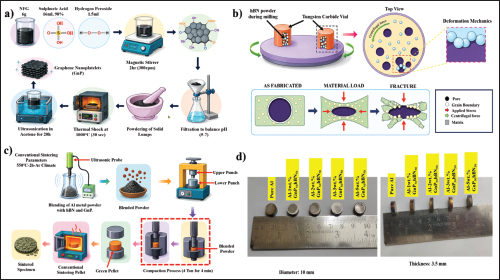
In this work, graphite nanoplatelets were obtained by thermally exfoliating a graphite intercalation compound prepared from natural flake graphite. The starting graphite, sourced commercially from Loba Chemie (India), had a mesh size of 60 and a stated purity of 98%. To form the intercalated precursor, the natural flake graphite was treated with a mixture of concentrated sulphuric acid and hydrogen peroxide. Specifically, 6 g of the graphite powder was combined with 16 mL of 98% H2SO4 and 1.5 mL of 30% H2O2, both supplied by Merck India, to facilitate the intercalation step before thermal expansion. After the reactants were combined, the suspension was kept under magnetic stirring at room temperature for about four hours, during which it gradually transformed into a light, foam-like mass. This intermediate material was washed five to seven times with distilled water until the filtrate reached neutral pH. After washing, the solid was oven-dried overnight at 80 °C. The dried intercalated graphite was quickly thermally treated in a muffle furnace at 1,000 °C for 30 s. Sudden heating released acidic species and formed thermally exfoliated graphite nanoplatelets. The complete experimental procedure and composition of the composites are presented in Table 1.
| Composition | Pure Al (wt%) | GnP (wt%) | hBN (wt%) | Abbreviation |
| Pure Al | 100 | 0 | 0 | Al |
| Al-1wt%GnP50hBN50 | 99 | 0.5 | 0.5 | Al-1wt%G50B50 |
| Al-2wt%GnP50hBN50 | 98 | 1 | 1 | Al-2wt%G50B50 |
| Al-3wt%GnP50hBN50 | 97 | 1.5 | 1.5 | Al-3wt%G50B50 |
| Al-5wt%GnP50hBN50 | 95 | 2.5 | 2.5 | Al-5wt%G50B50 |
Note: GnP: Graphene nanoplatelet; hBN: Milling of hexagonal boron nitride.
After thermal expansion, the graphite was ultrasonicated for 20 h to separate GnP layers. The same length of high-energy milling was used to exfoliate hBN from Oxford Lab Fine Chem LLP (India) with an average particle size of 5 µm. The binary hybrid system was prepared by dispersing GnP and hBN in acetone and ultrasonicating for 2 h. This hybrid dispersion was then combined with aluminium powder in acetone at a 1:50 ratio (1 g of powder in 50 mL of acetone) and ultrasonicated for two more hours to achieve uniform distribution. Ultrasonication was performed with a 1,000-W high-power oscillator (Sonapros PR 1000 MP, Oscar Ultrasonics Pvt. Ltd) at 2-3 kHz and a 12-mm horn. Acetone ((CH3)2CO) was used as a cooling fluid and dispersant to inhibit reactions and ensure nanofiller distribution. After being dispersed, the Al-GnP-hBN powder mix was then pressed together using a uniaxial press at 550 MPa for about 5 min. This formed green pellets that were about 10 mm in diameter and 3.5 mm thick. After that, these compacts were sintered in a tubular furnace (Bysakh & Co., India) for 2 h at 550 °C in an argon environment. The tubular furnace used in this investigation may become as hot as 1,700 °C. A Ducom TR 208 M1 ball-on-plate dry-sliding wear system was used to measure the wear behaviour of the sintered specimens, such as wear depth, material loss and wear rate. A hardened SAE 52100 steel ball with a diameter of 2 mm was used as the counterbody during testing. The tests were done with a standard load of 15 N, the ball spinning at 20 rpm for 10 min, and the temperature and humidity in the lab were about 298 K and 40%-60%. The dry-sliding experiments were done with only one set of operating settings because the main goal was to see how the generated nanocomposites wear down on their own. The examples were made using PM; thus, a test load of 15 N was chosen to make sure that the wear track did not get too bent or break. The same reason kept the speed of rotation at 20 rpm. The schematics of the experimental process have been shown in Figure 1. Initial observations showed that the penetration depth stayed the same after the first 10 min of sliding. Because of this, each test could only last 10 min.
Machine Learning Methods
ML approaches help find connections in tribological data that were not known before. This makes it easier to manage and improve the tribological properties of new materials (Hasan et al., 2021). Regression analysis within supervised ML systems proves particularly effective for predicting tribological behaviours. ML algorithms were specifically designed to anticipate the wear depth of aluminium and its composite. Efficient data collection is essential for constructing a strong, data-driven ML algorithm. ML models generally perform better when trained on substantial and well-matched data sets. Yet, generating adequate data from tribological tests demands considerable effort, time and experimental resources. Our data set has 2,412 data points for training and 604 data points for testing out of 3,016 sample data points. This makes it easier to figure out how deep the wear is. The ML algorithms took in two things: the weight percentage of reinforcement and the time in seconds. The variable that predicts is called wear depth.
Machine-learning Models
ML models are computer programs that learn from data and use it to make predictions about new data sets based on the input-output relationships they saw in training cases. We created models using five different ML algorithms: LR, RF, SVR, MLP and extreme gradient boosting (XGBoost). We used Python and its built-in ‘scikit-learn’ package to do the ML study. Below are full explanations of several algorithms. Linear regression is a simple and popular way to learn under supervision that shows how input features and a continuous output are related. This study creates a baseline by positing a linear correlation between wear depth, weight percentage and time. Although it provides easily interpretable coefficients showing how each parameter influences wear, its predictive performance is limited when the underlying wear behaviour is non-linear. Therefore, more advanced ML models are required to capture the complex interactions governing the wear process. People often utilise RF for classification jobs, but it is also quite good at solving regression problems. This approach uses a method called ‘ensemble’, which includes random decision trees. Each decision tree is trained using a sample from the training set of data. The parameter ‘n_estimators’ tells the RF model how many trees were made during training. This amount is what makes the model complex (Breiman, 2001).
The SVR extends the support vector machine framework (Zhong et al., 2022)to handle regression problems (Awad & Khanna, 2015). To ensure that predictions stay within predetermined bounds, SVR creates higher-order hyperplanes to capture strong correlations between the inputs and the intended outputs. By employing kernel functions to produce these hyperplanes, the overall generalisation error is decreased. Both the regularisation parameter and γ during hyperplane formation have a significant impact on SVR accuracy. Tribology research shows that SVR can achieve excellent accuracy even with little data sets and is especially effective with high-dimensional inputs (Hasan et al., 2022). A feedforward neural network with an input layer, one or more hidden layers and an output layer is called an MLP. Training is typically carried out using backpropagation, which calculates how the loss changes with respect to each weight and adjusts those weights through gradient descent.
XGBoost is a powerful ensemble method that extends gradient-boosted decision trees, offering strong predictive performance and efficient training. XGBoost grows trees one after another, with each tree focusing on the mistakes of the previous ones. This kind of learning works well for modelling the non-linear interactions that can be seen in wear data sets. XGBoost works well with structured data and has regularisation techniques that keep it from overfitting. It often makes better forecasts of wear depth based on wt% and time than many standard methods since it can generalise so well.
In this study, model performance was evaluated using three metrics: the coefficient of determination (R2), root mean square error (RMSE) and mean squared error (MSE). R2 measures how effectively the regression model accounts for the variability in the target values.
Data Preprocessing
At first, go through the data set to locate and fix any numbers that are missing or do not make sense. The data set is shuffled to keep hidden biases or unwanted patterns from coming into the ML models before training. Then, Python Colab is used to split the whole data set into training and test sets. The training set is used to build and fine-tune the ML models. Then, their ability to make predictions is tested on the test set, which is made up of data that is not seen before. Here, use a typical 80:20 split to divide the data set. Eighty per cent of the data are used for training and 20% for testing. A total of 2,412 samples are used to train the ML models and 604 samples are used to test them. In total, 3,016 data points are used to forecast wear depth.
Model Validation
To evaluate the robustness and generalisation capability of the developed ML models, k-fold cross-validation was additionally performed. The complete data set was randomly divided into five equal subsets (k = 5). During each iteration, four subsets were used for training and the remaining subset was used for validation. This procedure was repeated five times so that each subset served once as the validation set. The average values and standard deviations of R2, RMSE and MSE were calculated across all folds. Cross-validation minimises the dependence of model performance on a single train-test split and provides a more reliable assessment of predictive stability and generalisation.
Results and Discussion
Figure 2 shows a radar plot that compares the ML models that were tested for wear-depth prediction. It shows how work on R2, inverse RMSE and inverse mean absolute error (MAE). In the radar diagram, RF covers most of the area, which indicates better predictions and also has less errors than XGBoost, MLP, SVR and LR. It indicates that tree-based ensemble models are superior and how the non-linear interactions between wt% and sliding time affect wear behaviour. The small regions for SVR and LR show that simpler models have trouble capturing the system’s non-linear structure. Figure 3 illustrates the correlation matrix that connects the input features (wt% and time) with wear depth. This is our first look at how these things function together. The wear depth has a strong positive association with time (r = 0.71), which suggests that, as sliding continues, more material is lost, which is what tribology says should happen. The modest positive correlation between wt% and wear depth (r = 0.52) indicates that elevated reinforcement levels affect wear behaviour, possibly due to variations in hardness or microstructure. The slight negative correlation between wt% and time also illustrates that these inputs do not really depend on each other.
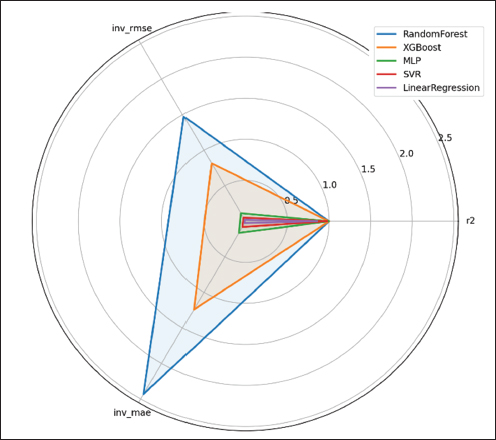
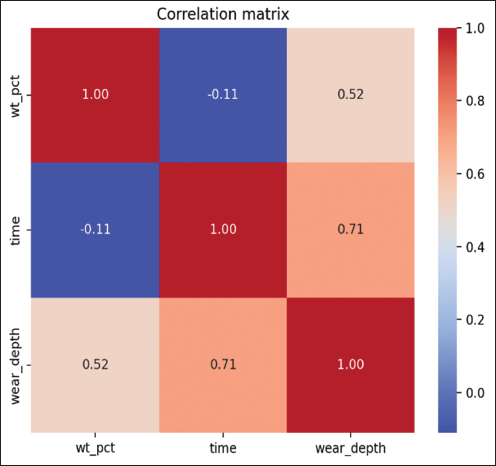
Figure 4 shows direct links between wear depth, wt% and time, verifying the matrix correlations. All compositions’ wear depth against time graph rises, confirming the significant positive correlation (r = 0.71) and that wear grows progressively while sliding continues. The wear depth against wt% graph is more scattered but still shows a modest rising trend, matching the moderate correlation (r = 0.52) and demonstrating that reinforcement percentage affects wear, though not as substantially as time. The figures support the correlation matrix results, suggesting that time affects wear more than wt%.
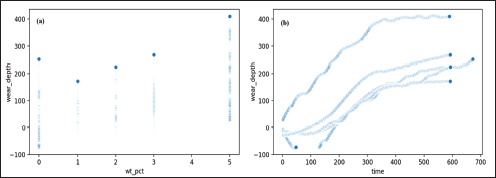
Figure 5 shows how wear depth is spread out under all test settings. Instead of a smooth peak, it has a multimodal structure. These distinct clusters match up with different wt% and sliding time combinations, which means that wear behaviour fluctuates a lot depending on the experimental setup. The range of wear depth from negative to big positive values shows that the data set has both mild and severe wear regimes. This kind of diversity shows how the system behaves in a non-linear way and shows how important it is to use advanced ML models that can learn complicated patterns instead of just relying on simple linear relationships. Figure 6 shows the pair plot, which summarises the distributions and pairwise relationships between wt%, time and wear depth, giving a clear overview of how the data set is structured. The diagonal plots demonstrate multimodal behaviour in wt% and wear depth, suggesting separate experimental groups and different wear regimes. The rising trends in both the time-wear and wt%-wear scatter plots confirm that longer sliding times and higher reinforcement levels lead to more material loss, which is consistent with the earlier correlation results. The plot shows that the data set is non-linear and clustered, which shows that we require ML models that can understand these complicated interactions.
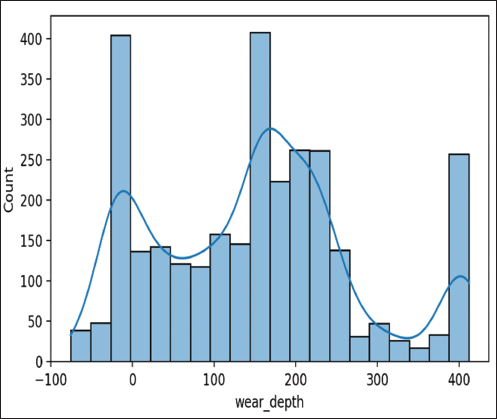
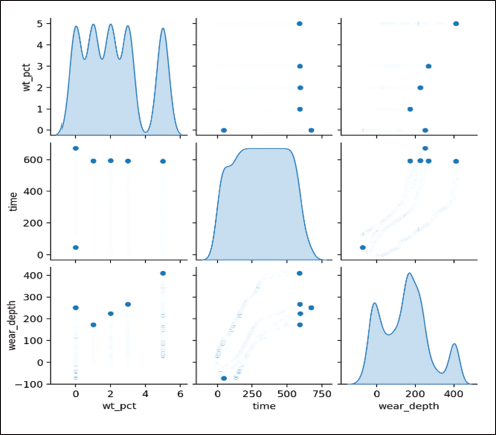
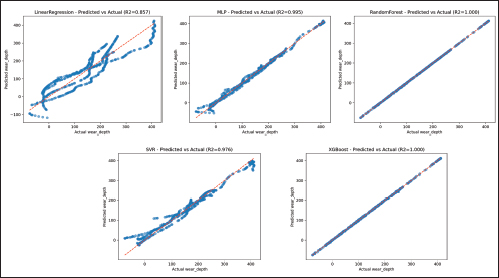
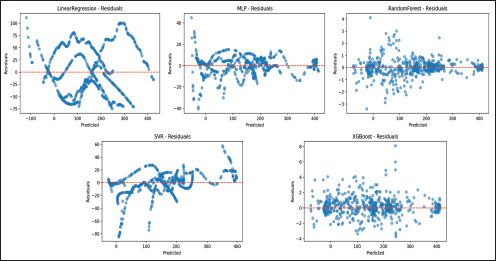
Figure 7 compares the projected wear depth results for each ML model to the actual wear depth results. This makes it easy to see how accurate their regression is. Both LR and SVR are not very close to the ideal 45° line, which shows how hard it is for them to represent the non-linear relationships between wt%, time, and wear depth. The MLP, on the other hand, shows better alignment, while the RF and XGBoost models are almost perfectly aligned with the reference line (R2 = 1.000), which shows that they are more accurate at making predictions. The almost perfect performance of tree-based ensemble models shows how well they can predict the complicated, non-linear wear behaviour in the data set, which is better than both linear and kernel-based methods. Figure 8 shows the residual distributions of the five ML models. This shows how well they can reduce prediction errors across the wear-depth range. LR, SVR and MLP all exhibit clear patterns and curves in their predictions. The residual dispersion also gets bigger as the wear-depth values increase. This behaviour shows that the model is not fitting well and shows that it cannot accurately predict the non-linear relationships between wt%, time and wear depth. On the other hand, the residuals of RF and XGBoost are tightly grouped around the zero-error line with no clear trend. This shows that they generalise better and have less systematic bias. Of them, RF has the least residual variance and the most even error dispersion, which confirms that it is the most accurate and robust model for forecasting wear depth in this investigation. To further evaluate the robustness and generalisation capability of the developed ML models, a five-fold cross-validation procedure was performed on the complete data set. The results of R2, RMSE and MSE demonstrated that the RF model consistently achieved the highest prediction accuracy with the lowest variability among all models. The small standard deviations of the performance metrics indicate that the model performance is stable and not strongly dependent on a particular train-test partition. Similar behaviour was observed for XGBoost, whereas LR and SVR exhibited comparatively larger variations across folds, reflecting their limited ability to capture the non-linear wear behaviour of the Al-GnP-hBN hybrid nanocomposites. The close agreement between the cross-validation results and the hold-out test-set performance further confirms the robustness and generalisability of the proposed ML framework.
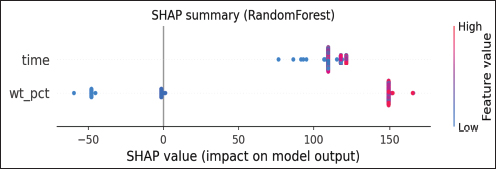
The SHAP summary plot for the RF model in Figure 9 shows how each feature helps forecast wear depth. Time has the biggest and most consistently positive SHAP values, which shows that the length of time spent sliding is the main cause of wear. In contrast, wt% has a lesser but still significant effect. For example, larger levels of reinforcement (red points) lead to higher wear predictions in some cases and lower predictions in others. This is because wt% interacts with the wear mechanism in a more complicated and non-linear way. The clear spread and size of the SHAP values show that the RF model does a good job of finding the most important elements that cause wear. This fits with what we know about tribology: longer sliding periods lead to more material loss, and the nature of the reinforcement affects how the material reacts to wear. Furthermore, positive SHAP values associated with higher sliding times indicate an increased contribution to wear-depth prediction, whereas lower sliding times contribute less strongly to material removal. This behaviour is physically consistent with dry sliding wear, where prolonged contact causes progressive surface degradation and deeper wear tracks. The influence of reinforcement wt% is comparatively more complex. The distribution of SHAP values suggests that reinforcement content affects wear through competing mechanisms, including enhanced hardness, improved load-transfer capability and the lubricating action of GnP and hBN. However, higher reinforcement contents may also promote particle agglomeration and local microstructural heterogeneity, which can alter wear behaviour. Consequently, both positive and negative SHAP contributions are observed for wt%, reflecting its non-linear interaction with the wear process. These observations confirm that sliding time is the primary governing parameter, while reinforcement content acts as a secondary factor modifying the overall wear response.
Conclusion
The present work applied an ML framework to analyse and predict the wear behaviour of aluminium hybrid composites reinforced with GnP and hBN, using wt% and sliding time as input variables. Based on the observations made, the following conclusions were drawn:
The comparative evaluation of five ML models shows that ensemble-based methods outperform linear and kernel approaches in modelling the non-linear wear behaviour of aluminium hybrid composites.
RF emerged as the most robust and accurate predictor across all performance metrics, demonstrating strong generalisation and minimal error dispersion throughout the data set.
LR, SVR and MLP exhibited higher residual variability, indicating limited capability in capturing complex interactions between reinforcement content and wear progression.
SHAP explainability revealed that sliding time is the dominant factor governing wear depth, whereas reinforcement wt% plays a secondary but still significant role in shaping the overall response.
The combined use of predictive modelling, residual analysis, radar comparison and SHAP interpretation offers a reliable and transparent workflow for tribology-focused ML studies.
The findings confirm that ML-driven analysis provides a fast, cost-effective and scalable route for understanding and optimising wear behaviour in aluminium hybrid composites for advanced engineering applications.
The authors declared no potential conflicts of interest with respect to the research, authorship and/or publication of this article.
The authors received no financial support for the research, authorship and/or publication of this article.
Abushanab W., Moustafa E., Ghandourah E., Hussein H., Taha M., & Mosleh A. (2023). Impact of hard and soft reinforcements on the microstructure, mechanical, and physical properties of the surface composite matrix manufactured by friction stir processing. Coatings, 13(2), 284. https://doi.org/10.3390/coatings13020284
AlMangour B., Kim Y.–K., Grzesiak D., & Lee K.–A. (2019). Novel TiB2–reinforced 316L stainless steel nanocomposites with excellent room–and high–temperature yield strength developed by additive manufacturing. Composites Part B: Engineering, 156, 51–63. https://doi.org/10.1016/j.compositesb.2018.07.050
Awad M., & Khanna R. (2015). Efficient learning machines. Apress. https://doi.org/10.1007/978–1–4302–5990–9
Breiman L. (2001). Random forests. Machine Learning, 45(1), 5–32. https://doi.org/10.1023/A:1010933404324
Casati R., & Vedani M. (2014). Metal matrix composites reinforced by nano–particles—A review. Metals, 4(1), 65–83. https://doi.org/10.3390/met4010065
Chung D. D. L. (1987). Exfoliation of graphite. Journal of Materials Science, 22(12), 4190–4198. https://doi.org/10.1007/BF01132008
Das A., Swain S. R., Sahoo N., Das A., Patel P., Alam S. N., Dinda S. K., & Ghosh A. (2026). MWCNT–GnP–hBN reinforced Al–based nanocomposites with improved tribological behaviour for automotive applications. Transactions of the Indian Institute of Metals, 79(4), 58. https://doi.org/10.1007/s12666–026–03811–2
Falin A., Cai Q., Santos E. J. G., Scullion D., Qian D., Zhang R., Yang Z., Huang S., Watanabe K., Taniguchi T., Barnett M. R., Chen Y., Ruoff R. S., & Li L. H. (2017). Mechanical properties of atomically thin boron nitride and the role of interlayer interactions. Nature Communications, 8(1), 15815. https://doi.org/10.1038/ncomms15815
Firestein K. L., Corthay S., Steinman A. E., Matveev A. T., Kovalskii A. M., Sukhorukova I. V., Golberg D., & Shtansky D. V. (2017). High–strength aluminum–based composites reinforced with BN, AlB2 and AlN particles fabricated via reactive spark plasma sintering of Al–BN powder mixtures. Materials Science and Engineering: A, 681, 1–9. https://doi.org/10.1016/j.msea.2016.11.011
Geim A. K., & Novoselov K. S. (2007). The rise of graphene. Nature Materials, 6(3), 183–191. https://doi.org/10.1038/nmat1849
Geng Y., Wang S. J., & Kim J.–K. (2009). Preparation of graphite nanoplatelets and graphene sheets. Journal of Colloid and Interface Science, 336(2), 592–598. https://doi.org/10.1016/j.jcis.2009.04.005
Ghosh A., Alam S. N., Patil G., Patel P., Sachan V., Haq N., & Seikh A. H. (2025). Enhancing mechanical and tribological properties of Al–based nanocomposites via equal–weight–ratio graphite nanoplatelet and hexagonal boron nitride hybrid nanofillers. Journal of Materials Engineering and Performance, 35, 8651–8669. https://doi.org/10.1007/s11665–025–12329–5
Ghosh A., Sahoo N., Shrivastava P., Das B., Alam S. N., Patel P., Das A., Kar U. K., & Tiwari J. (2026). High–performance aluminum–graphene nanoplatelet nanocomposites. JOM, 78(3), 2658–2677. https://doi.org/10.1007/s11837–025–08099–z
Ghosh A., Shukla U., Sahoo N., Das B., Kar U. K., Shrivastava P., & Alam S. N. (2025). Development and mechanical characterization of copper–hexagonal boron nitride metal matrix nanocomposites using powder metallurgy route. Journal of Materials Engineering and Performance, 34(4), 3348–3364. https://doi.org/10.1007/s11665–024–09292–y
Ghosh A., Shukla U., Sahoo N., Ganguly S., Shrivastava P., Kumar L., & Alam S. N. (2023). Effect of ball milling on hexagonal boron nitride (hBN) and development of Al–hBN nanocomposites by powder metallurgy route. Materials Science–Poland, 41(1), 68–93. https://doi.org/10.2478/msp–2023–0009
Gostariani R., Ebrahimi R., Asadabad M. A., & Paydar M. H. (2018). Mechanical properties of Al/BN nanocomposites fabricated by planetary ball milling and conventional hot extrusion. Acta Metallurgica Sinica (English Letters), 31(3), 245–253. https://doi.org/10.1007/s40195–017–0640–1
Hamrol A., Tabaszewski M., Kujawi?ska A., & Czy?ycki J. (2024). Tool wear prediction in machining of aluminum matrix composites with the use of machine learning models. Materials, 17(23), 5783. https://doi.org/10.3390/ma17235783
Hasan M. S., Kordijazi A., Rohatgi P. K., & Nosonovsky M. (2021). Triboinformatic modeling of dry friction and wear of aluminum base alloys using machine learning algorithms. Tribology International, 161, 107065. https://doi.org/10.1016/j.triboint.2021.107065
Hasan M. S., Wong T., Rohatgi P. K., & Nosonovsky M. (2022). Analysis of the friction and wear of graphene reinforced aluminum metal matrix composites using machine learning models. Tribology International, 170, 107527. https://doi.org/10.1016/j.triboint.2022.107527
Hatui G., Bhattacharya P., Sahoo S., Dhibar S., & Das C. K. (2014). Combined effect of expanded graphite and multiwall carbon nanotubes on the thermo mechanical, morphological as well as electrical conductivity of in situ bulk polymerized polystyrene composites. Composites Part A: Applied Science and Manufacturing, 56, 181–191. https://doi.org/10.1016/j.compositesa.2013.10.007
Huang Y., Bazarnik P., Wan D., Luo D., Pereira P. H. R., Lewandowska M., Yao J., Hayden B. E., & Langdon T. G. (2019). The fabrication of graphene–reinforced Al–based nanocomposites using high–pressure torsion. Acta Materialia, 164, 499–511. https://doi.org/10.1016/j.actamat.2018.10.060
Kumar L., Sahoo S. K., & Alam S. N. (2021). Effect of xGnP/MWCNT reinforcement on mechanical, wear behavior and crystallographic texture of copper–based metal matrix composite. Materials Science and Engineering: B, 263, 114888. https://doi.org/10.1016/j.mseb.2020.114888
Li L. H., Cervenka J., Watanabe K., Taniguchi T., & Chen Y. (2014). Strong Oxidation Resistance of Atomically Thin Boron Nitride Nanosheets. ACS Nano, 8(2), 1457–1462. https://doi.org/10.1021/nn500059s
Li S., Yue X., Li Q., Peng H., Dong B., Liu T., Yang H., Fan J., Shu S., Qiu F., & Jiang Q. (2023). Development and applications of aluminum alloys for aerospace industry. Journal of Materials Research and Technology, 27, 944–983. https://doi.org/10.1016/j.jmrt.2023.09.274
Marian M., & Tremmel S. (2021). Current trends and applications of machine learning in tribology—A review. Lubricants, 9(9), 86. https://doi.org/10.3390/lubricants9090086
Mishra A. K. (2025). Machine learning–based prediction of coefficient of friction and specific wear rate in aluminum–based metal matrix composites. SSRN. https://doi.org/10.2139/ssrn.5358844
Mohammed M. M. M., Elkady O. A., & Abdelhameed A. W. (2013). Effect of alumina particles addition on physico–mechanical properties of Al–matrix composites. Open Journal of Metal, 3(4), 72–79. https://doi.org/10.4236/ojmetal.2013.34011
Moosavi S. M., Jablonka K. M., & Smit B. (2020). The role of machine learning in the understanding and design of materials. Journal of the American Chemical Society, 142(48), 20273–20287. https://doi.org/10.1021/jacs.0c09105
Pérez–Bustamante R., Bolaños–Morales D., Bonilla–Martínez J., Estrada–Guel I., & Martínez–Sánchez R. (2014). Microstructural and hardness behavior of graphene–nanoplatelets/aluminum composites synthesized by mechanical alloying. Journal of Alloys and Compounds, 615, S578–S582. https://doi.org/10.1016/j.jallcom.2014.01.225
Sahoo N., Alam S. N., Ghosh A., Patel P., Das B., Das A., Shrivastava P., & Msomi V. (2026). Investigation of synergistic effect of exfoliated molybdenum disulfide and multi–walled carbon nanotubes on Al–based nanocomposites: A powder metallurgy approach. Materials Today Communications, 53, 115458. https://doi.org/10.1016/j.mtcomm.2026.115458
Sahoo N., Alam S. N., Ghosh A., Sahoo K., Das B., Kar U., Shrivastava P., & Rajoriya A. (2025). Study of mechanical properties of Al–based hybrid nanocomposites reinforced with MoS 2 nanoflakes and graphite nanoplatelets: An investigation of the synergistic effect. Advanced Composite Materials, 34(6), 1088–1122. https://doi.org/10.1080/09243046.2025.2450176
Sahoo N., Ghosh A., Sahoo K., Rajoriya A., Das B., Shrivastava P., & Alam S. N. (2024). Effect of ball milling on bulk MoS 2 and the development of Al–MoS 2 nanocomposites by powder metallurgy route. International Journal of Materials Research, 115(11–12), 933–953. https://doi.org/10.1515/ijmr–2024–0039
Sardarabadi H., Kiani S., Karkhanechi H., Mousavi S. M., Saljoughi E., & Matsuyama H. (2022). Effect of nanofillers on properties and pervaporation performance of nanocomposite membranes: A review. Membranes, 12(12), 1232. https://doi.org/10.3390/membranes12121232
?enel M. C., & Gürbüz M. (2021). Synergistic effect of graphene/boron nitride binary nanoparticles on aluminum hybrid composite properties. Advanced Composites and Hybrid Materials, 4(4), 1248–1260. https://doi.org/10.1007/s42114–021–00209–0
Shrivastava P., Alam S. N., Maity T., & Biswas K. (2021). Effect of graphite nanoplatelets on spark plasma sintered and conventionally sintered aluminum–based nanocomposites developed by powder metallurgy. Materials Science–Poland, 39(3), 346–370. https://doi.org/10.2478/msp–2021–0029
Song L., Ci L., Lu H., Sorokin P. B., Jin C., Ni J., Kvashnin A. G., Kvashnin D. G., Lou J., Yakobson B. I., & Ajayan P. M. (2010). Large scale growth and characterization of atomic hexagonal boron nitride layers. Nano Letters, 10(8), 3209–3215. https://doi.org/10.1021/nl1022139
Surappa M. K. (2003). Aluminium matrix composites: Challenges and opportunities. Sadhana, 28(1–2), 319–334. https://doi.org/10.1007/BF02717141
Udoye N. E., Fayomi O. S. I., & Inegbenebor A. O. (2019). Assessment of wear resistance of aluminium alloy in manufacturing industry—A review. Procedia Manufacturing, 35, 1383–1386. https://doi.org/10.1016/j.promfg.2019.09.007
Wickramaratne D., Weston L., & Van de Walle C. G. (2018). Monolayer to bulk properties of hexagonal boron nitride. The Journal of Physical Chemistry C, 122(44), 25524–25529. https://doi.org/10.1021/acs.jpcc.8b09087
Yasmin A., Luo J.–J., & Daniel I. M. (2006). Processing of expanded graphite reinforced polymer nanocomposites. Composites Science and Technology, 66(9), 1182–1189. https://doi.org/10.1016/j.compscitech.2005.10.014
Zhong X., Gallagher B., Liu S., Kailkhura B., Hiszpanski A., & Han T. Y.–J. (2022). Explainable machine learning in materials science. npj Computational Materials, 8(1), 204. https://doi.org/10.1038/s41524–022–00884–7
