
Sustainable Manufacturing and Foundry Practices

 Search

Rakesh Sikder1,2 , Debasis Sau3, Soumyabrata Chakravarty4, Partha Haldar5, Saroj Mandal3, Titas Nandi1 and Goutam Sutradhar6
1Department of Mechanical Engineering, Jadavpur University, Kolkata, India
2Department of Mechanical Engineering, Elitte College of Engineering, Kolkata, India
3Department of Civil Engineering, Jadavpur University, Kolkata, India
4Department of Mechanical Engineering, Brainware University, Kolkata, India
5Department of Mechanical Engineering, Government College of Engineering and Ceramic Technology, Kolkata, India
6National Institute of Technology, Jamshedpur, India

Creative Commons Non Commercial CC BY-NC: This article is distributed under the terms of the Creative Commons Attribution-NonCommercial 4.0 License (http://www.creativecommons.org/licenses/by-nc/4.0/) which permits non-Commercial use, reproduction and distribution of the work without further permission provided the original work is attributed.
Cast iron remains one of the most widely used alloys in modern industrial applications, with cupola furnaces being the most economical and commonly employed melting units. The melting of pig iron, scrap metal and flux in a cupola furnace generates a significant quantity of oxidized by-product known as cupola slag, which is presently classified as industrial waste and predominantly disposed of in landfills, posing environmental concerns. This study aims to systematically evaluate the potential of cupola slag as a sustainable construction material by comparing its characteristics with established industrial by-products, such as fly ash and ground granulated blast furnace slag. The physical and chemical properties of cupola slag were analysed using standard testing methods, with its chemical composition determined by X-ray fluorescence spectroscopy. The R3 reactivity test classified cupola slag as a pozzolanic, low-reactivity material. Leachability tests confirmed that the slag is non-toxic and complies with regulatory limits for hazardous elements. A life cycle assessment revealed that landfill disposal of cupola slag results in a global warming potential of approximately 32.12 kg CO2-equivalent per kilogram of slag. Furthermore, a comparative performance evaluation was conducted to assess its suitability as a partial or full replacement for cement and natural aggregates in concrete. The results demonstrate that cupola slag exhibits promising potential as a sustainable supplementary material in cement concrete, offering significant environmental benefits by reducing landfill disposal, conserving natural resources and promoting eco-friendly construction practices.
Cupola slag, concrete, physical properties, Mechanical properties, XRF, XRD
Introduction
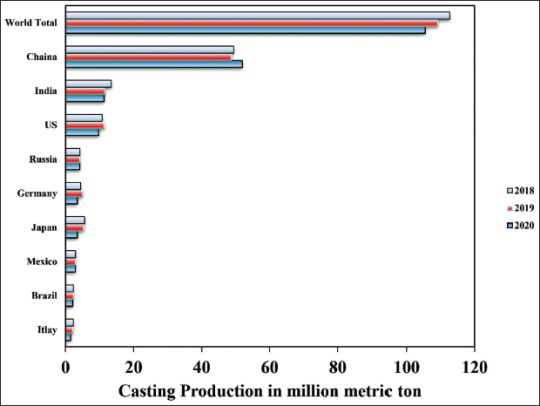
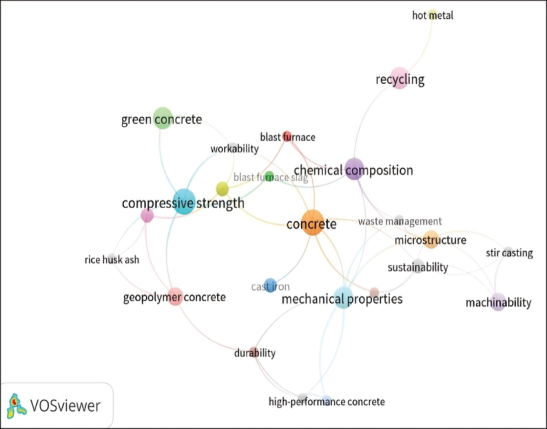
Rapid industrial expansion to meet the demands of an expanding population is a major contributing factor to the growing amount of industrial waste produced and discarded each year (Cheah et al., 2021; Sikder et al., 2025). In 2020, global casting production was estimated at roughly 105 million metric tons, based on data from the Statista Research Department (n.d.). With 51.95 million metric tonnes, China led the world in production. India came in second with 11.31 million metric tonnes, or roughly 11% of the total. As shown in Figure 1(a), global casting production from 2018 to 2020 reveals yearly variations in overall output among the major producing countries. This exceeded the production of the United States, which occupied the second position in 2019. As a result, the steel and iron industries produce large amounts of sludge and slag on a daily basis, either as waste or by-products, including cupola slag, ground granulated blast furnace slag (GGBS), and fly ash (Gencel et al., 2021). The cupola is employed for melting pig iron and fluxes to produce grey cast iron, with a secondary product known as cupola slag. Cast iron manufacturing results in the generation of roughly 40–80 kg of slag per metric ton (Aderibigbe & Ojobo, 1982; Sikder, Chakravarty, Haldar, Nandi, Mandal, et al., 2023). The chemical makeup of cupola slag is greatly influenced by the melting process in a cupola as well as the composition of the input materials. Scientists have found that cupola slag typically includes substances such as Al2O3, MnO, SiO2, MgO, TiO2, CaO, Fe2O3, Cr2O3 and Na2O (Balaraman & Ligoria, 2015; Chakravarty, Sikder, et al., 2023a; 2023b; 2024). During the cooling process, slag viscosity and crystallization behaviour are directly influenced by its chemical composition. As a result, the porosity, dimensions and characteristics of the solidified slag vary with composition, thereby affecting its suitability for different applications (Baricová, 2018). The melting process in 21,532 of the 47,145 cast iron plants worldwide is carried out in cupola furnaces. With an annual cast iron production of around 11 million tonnes out of a global total of 47.795 million tonnes, India plays a significant role in the industry. Nearly 5,000 cupola furnaces across the country generate 7–8 million tonnes of cast iron per year, leading to the production of approximately 0.4–0.5 million tonnes of cupola slag annually (Chakravarty, Haldar, et al., 2023). Preservation of natural resources and addressing the impact of global warming are paramount concerns in today’s environmental discourse. The disposal of waste in landfills can lead to the pollution of air, water and soil, resulting in adverse effects on the growth of vegetation, plant life and human health. In recent years, the recycling of industrial slag has become a central focus for various academics, driven by the shared goal of safeguarding the global environment (Pribulová et al., 2019). Currently, a growing number of researchers are actively exploring alternative and practical applications for cupola slag within the construction industry. This versatile material has the potential to replace coarse and fine aggregates, as well as cement, in the production of concrete, opening up new avenues for sustainable construction practices. In its composition, concrete typically consists of a blend of cement, fine aggregates and coarse aggregates (Alabi & Afolayan, n.d.). It is important to note that the production of cement results in a significant release of CO2 and other greenhouse gases, which have adverse environmental implications. For instance, the production of 1 ton of Ordinary Portland Cement (OPC) clinker leads to the emission of 1 ton of CO2 and other harmful greenhouse gases that pose environmental hazards. In the composition of concrete, natural aggregates typically account for 60%–70% of the total volume of materials. The role of fine aggregate within concrete is of paramount importance, constituting around 30% of the total concrete mix volume (Waseem & Singh, 2016). The workability and cohesiveness of concrete are strongly influenced by the effectiveness of fine aggregates in occupying the voids between larger aggregate particles and the cement paste. Historically, natural river sand has been the principal source of fine aggregates for concrete (Waseem & Singh, 2016). However, in an effort to conserve natural resources and mitigate environmental pollution and waste generation associated with landfills, various types of industrial waste, including blast furnace slag, copper slag and steel slag, have been explored as alternative substitutes for natural river sand in concrete production. The construction sector stands as the foremost consumer of materials on a global scale, with an ever-increasing demand for building materials. Currently, worldwide consumption exceeds an impressive 60 gigatons per year (Thomas et al., 2021). In response to the growing demand for construction materials and the increasing emphasis on environmental sustainability, the effective use of slags in concrete has gained significant importance. Consequently, extensive research has been undertaken to evaluate the potential of slags as viable construction materials. The primary focus of this study is to explore the viability of integrating cupola slag as an alternative to conventional building materials within the construction sector. Figure 1(b) displays the publication years of the literature containing the specified keywords.
Figure 1(a). Global production of casting, 2018–2020.
Source: Statista Research Department (n.d.).
Figure 1(b). Co-occurrence Network of Keywords.
This research aims to reduce the environmental impact of industrial waste disposal while conserving natural aggregate and cement resources. It also seeks to advance sustainable construction practices. However, prior studies show minimal research on the use of cupola slag as a replacement for cement, fine aggregates and coarse aggregates, and only a few studies have examined the leachability and life cycle assessment (LCA) of virgin cupola furnace slag. Thus, the viability of using cupola slag in concrete in place of cement, fine aggregate and coarse aggregate is investigated in this work. It also carries out a thorough laboratory analysis to evaluate the leachability characteristics of cupola slag in addition to its physical and chemical attributes. Moreover, an LCA methodology is utilized to assess the ecological consequences of cupola slag disposal in landfills. Through a case study, the study also looks at how partial substitution affects the performance of concrete made with cupola slag, offering useful insights.
Materials and methodology
Cupola slag collected from Binay Udyog Pvt Ltd., Howrah, West Bengal, India, was processed by ball milling to prepare it for application as a substitute for cement as well as natural coarse and fine aggregates. Fresh river sand, with particles passing through a 4.75 mm sieve, has been chosen as the fine aggregate for this study as standard. This selection underscores the relatively small size of the sand particles, which makes them well-suited for use in concrete production. To ensure the fine aggregates conform to the specifications outlined in IS 383: 2016 (Indian Standards Institution, 1970), a sieve analysis has been conducted. Crushed rock serves as the primary natural coarse aggregate in this study as standard, while crushed cupola slag (Figure 2(a)) is utilized as a partial replacement for coarse aggregate. Both of these aggregates have been carefully selected, with their particle sizes falling within the range of 20 mm and 4.75 mm. The physical properties of aggregate and cement were tested in the lab for suitability analysis.
Figure 2. (a) untreated cupola slag, (b) cupola slag prepared as coarse aggregate and (c) cupola slag prepared as fine aggregate.
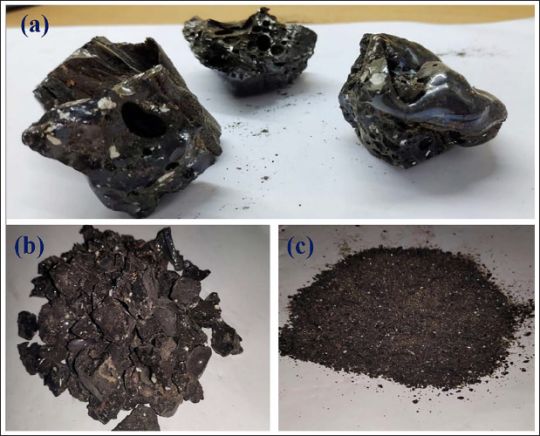
Compliance of the coarse aggregates with IS 383: 2016 (Indian Standards Institution, 1970) was assessed through sieve analysis, along with an evaluation of the physical properties of cupola slag fine and coarse aggregates. Figure 2(b) and Figure 2(c) are assessed through measurements of specific gravity, bulk density and water absorption. Impact, crushing and abrasion tests were conducted to assess the mechanical properties of cupola slag and natural coarse aggregates, as specified in IS 383: 2016 (Indian Standards Institution, 1970). Using an X-ray diffraction (XRD) instrument made by Rigaku Corporation and an X-ray fluorescence (XRF) analyser (a Rigaku ED-XRF Model-NEX DE Analyser), the chemical composition and mineral phases found in cupola slag were identified. Heavy metal levels in cupola slag were assessed using a modified Toxicity Characteristic Leaching Procedure. For testing, cupola slag was ground into a powder and sieved through a 10-mm mesh screen.
Shaking of each flask was carried out at 60 rpm for 18 hours under ambient temperature conditions (~25__degreesignC). The prepared solution contained 5.7 mL of 98% glacial acetic acid, 64.3 mL of 1 N NaOH solution and 100 g of crushed cupola slag. A variety of analytical techniques, including GC-MS for organic compounds and ICP-MS for heavy metals, were used to examine the resultant leachate samples for contaminants or parameters of interest.
The environmental impacts of cupola slag disposal were evaluated using Ecoinvent (2022) data and OpenLCA 2.1, following the ISO 14040 (LCA Consequential, 2015) framework, which includes goal and scope definition, inventory analysis, impact assessment and interpretation. Disposal-related environmental impacts were assessed using XRF-derived material composition as input data, with disposed slag defined as the environmental output and transportation effects excluded. The ReCiPe Midpoint (H) 2016 method was employed, and a case study on partial replacement of natural aggregates in concrete was also examined.
Results and Discussions
Physical Properties
Assessment of cupola slag as a concrete aggregate was carried out by examining its physical characteristics, such as colour, appearance, structure, particle size, water absorption, bulk density and specific gravity. Generally, the slag exhibits a vitrified and dense structure, with colour variations from green to brown (Pribulová et al., 2018). Additionally, the size and colour of cupola slag can differ due to variations in operating procedures and the quality of metal processed in the furnaces. Research studies (Agarwal et al., 1991; Baricová, 2018; Pribulová et al., 2018; Pribulová et al., 2019) have identified two distinct types of cupola slag based on their cooling methods. Cupola slag occurs in two forms: a slowly cooled, grey crystalline slag that is crushed into gravel-sized particles for use as aggregate, and a granulated slag produced by rapid water quenching, which forms a glassy material suitable for cementitious applications. Based on particle size, cupola slag can be classified as cementitious material (≈75 μm), fine aggregate (<4.75 mm) and coarse aggregate (10–20 mm).
Table 1. Physical Characteristics of Cupola Slag as Coarse Aggregate and Natural Coarse Aggregate.
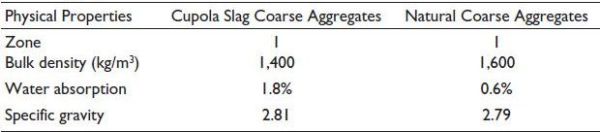
Table 2. Physical Characteristics of Cupola Slag as Fine Aggregates and Natural Fine Aggregates.

Table 1 shows that cupola slag used as coarse aggregate has lower bulk density and higher water absorption than natural coarse aggregates due to its porous structure, while differences in specific gravity influence concrete density and durability. Overall, the physical properties indicate that cupola slag can partially replace natural coarse aggregates and closely match natural fine aggregates, making it a potential substitute in concrete applications. Table 2 presents the physical properties of natural fine aggregates and cupola slag as fine aggregates. The gradation of aggregates, including the cupola slag, as established by sieve analysis, is shown in Figure 3. Based on particle classification, 5% of the cupola slag particles were gravel-sized, while 95% were sand-sized.
Workability
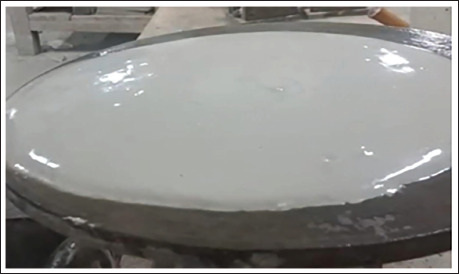
The flow table test (Figure 4) results indicate that the flowability of cupola slag-based cement ranges from 120% to 160%. The glassy structure and spherical particles of finely ground cupola slag promote improved flow by minimizing internal friction. Consequently, composite materials exhibit enhanced flowability as the proportion of natural aggregates replaced by fine and coarse cupola slag increases. This implies that the cohesiveness of the mixture is impacted by the addition of cupola slag. Furthermore, the cupola slag-based coarse aggregate is well-graded gravel, and the cupola slag-based fine aggregate is well-graded sand, according to sieve analysis (Figure 3).
Mechanical properties
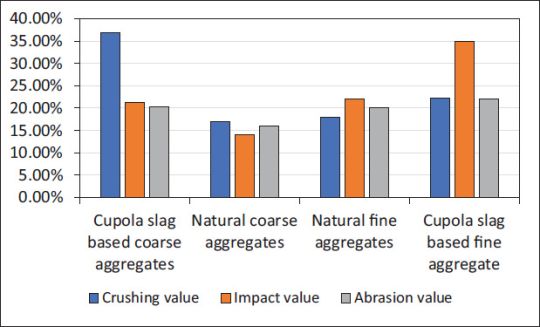
Mechanical tests on fine and coarse aggregates, including crushing, abrasion and impact tests, indicate that due to its porous nature and distinct grading, cupola slag performs comparably to natural fine aggregates and can serve as a suitable substitute in high-quality concrete. However, the significantly lower crushing strength of cupola slag compared to natural coarse aggregates (Figure 5) makes it unsuitable as a replacement for coarse aggregates in high-grade concrete.
Figure 3. Particle Size Distribution Curve Of Different Natural And Cupola Slag-Based Fine And Coarse Aggregate.
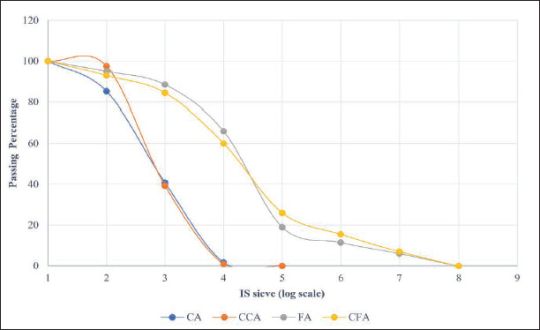
Notes: CA – Coarse aggregate, FA – Fine aggregate, CCA – Cupola slag-based coarse aggregate, CFA – Cupola slag-based fine aggregate.
Figure 4. Flow Table Test of Cupola Slag-Based Cement.
Concrete compressive strength increases with lower water–cement ratios and higher replacement levels of cupola slag as fine aggregate, primarily due to improvement of the interfacial transition zone and pore-filling effects that create a denser microstructure. These results indicate that replacing conventional materials with cupola slag up to an optimum percentage does not compromise the strength requirements specified in design standards. Although cupola slag possesses relatively good mechanical properties, its inherently porous structure increases concrete porosity when used as coarse aggregate, thereby diminishing compressive strength (Sikder et al., 2024; Waseem et al., 2021).
Figure 5. Mechanical Properties of Cupola Slag and Natural Coarse Aggregates.
The addition of cupola slag as a partial cement replacement has a substantial effect on concrete compressive strength, with strength enhancement occurring at replacement levels below the optimal 50%. Previous investigations (Aderibigbe & Ojobo, 1982; Alabi & Afolayan, n.d.; Kubiliute et al., 2018; Thomas et al., 2021) have demonstrated improved compressive strength values for concrete containing cupola slag as a cementitious material within the 5%–30% replacement range. Additionally, research (Rodríguez-Mendoza et al., 2012) has examined the cementitious behaviour of cupola slag (ranging from 10% to 80%) in combination with calcium sulphate cement and Portland cement as activation materials. The maximum replacement level attained was 80%, comprising 15% anhydrite calcium sulphate cement and 5% Portland cement. Furthermore, a patented method (Sosa et al., 2021) was developed for producing slag cement using cupola slag. The highest recorded compressive strength of 7,000 psi was achieved with an optimized cupola slag content of 35%, which was characterized by a Blaine’s surface area of 6,000–6,500 cm2/g.
Research by Sosa et al. (2020) on concrete incorporating electric arc furnace slag and cupola slag supports these findings. They observed that cupola slag particles integrate well with the cement paste and natural aggregate forming compounds in the shape of parallel hexagonal plates, which are consistent with hydrated calcium aluminosilicates. These findings are consistent with the report (Sosa et al., 2020) that the addition of cupola slag increased compressive strength. By incorporating cupola slag, the concrete’s porosity is reduced, increasing its density and compressive strength.
Hydraulicity
One of the main characteristics of slag that greatly affects its binding behaviour is its hydraulicity or pozzolanicity. The setting characteristics of both cementitious and supplemental cementitious materials are determined by these properties because they undergo chemical reactions when mixed with water and continue to react even after hardening under extended water curing (Aristizábal et al., 2014). Earlier, a study (Pribulová, 2018) illustrated the granulated cupola slag’s hydraulic qualities and its possible application as an activator in the manufacturing of cement. The pozzolanic reaction index at 28 days was 25% for raw cupola slag and 30% for calcined cupola slag when mixed with Portland cement, according to Aderibigbe and Ojobo’s investigation into calcination to increase its reactivity. Nonetheless, it was discovered that a minimum pozzolanic activity index of 85% was necessary for slags, suggesting that cupola slag is comparatively less reactive. Furthermore, the study verified that cupola slag reacts more slowly than slags from blast furnaces. Thomas et al. (2021) conducted a pozzolanicity test in compliance with EN 196-5, a standard that measures hydroxyl ion and calcium oxide concentrations. With CaO levels of 6.4 and OH⁻ values of 58, the results showed that cupola slag satisfies the pozzolanicity requirements. To further examine the hydraulic and pozzolanic properties of cupola slag, another researcher (Meshram et al., 2022) carried out an altered R3 test. The calcium hydroxide consumption levels of the two cupola slag samples examined in this study were 42 g/100 g and 43 g/100 g of supplementary cementitious material (SCM), respectively, with corresponding heat release values of 219 J/g SCM and 207 J/g SCM. Cupola slag is categorized as a ‘pozzolanic, less reactive’ material based on these findings. It does, however, also fall on the line between the ‘pozzolanic, less reactive’ and ‘latent hydraulic, less reactive’ categories because of its crystalline nature. Numerous studies show that concrete containing cupola slag achieves greater strength in later curing stages as opposed to early-age curing because of its pozzolanic properties (Raja & Kumar, 2023).
Leachability Test
Leaching is the process by which heavy and toxic materials dissolve and are released when industrial waste and water come into contact. Extreme conditions, such as extremely acidic or alkaline environments, make this process worse. There are serious health and environmental hazards when the resultant leachate contaminates soil and water sources. Cupola furnace slag contains concentrations of several heavy and toxic metals, such as nickel (0.02 mg/L), chromium (0.05 mg/L), mercury (0.001 mg/L), copper (0.02 mg/L), lead (0.01 mg/L), zinc (0.02 mg/L) and cadmium (0.002 mg/L), according to the leachability test results. The contaminants present in the slag and their corresponding concentrations are revealed by these results. Cupola furnace slag is classified as a non-hazardous and non-toxic material because the data show that it contains very low levels of heavy and toxic substances. To create green concrete, cupola furnace slag can be utilized as an aggregate, providing a sustainable building option that is less harmful to the environment (Rodrigues et al., 2017; Thomas et al., 2021).
Table 3. Chemical Components of Cupola Slag, GGBS.
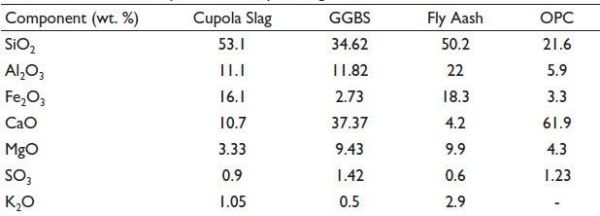
Source: Ainie Mat Dom et al. (2022), and for fly ash, Bhatt et al. (2019).
Chemical composition analysis
The chemical composition of concrete materials strongly influences their mechanical performance and durability. Table 3 compares the chemical composition (wt.%) of cupola slag with commonly used construction materials—GGBS, OPC, and fly ash—based on XRF analysis of the cupola slag.
SiO2 was found to be the predominant constituent of the cupola slag, consistent with the XRD analysis. Cupola slag’s composition also contained a number of additional metal oxides, all of which were within permissible bounds. It is worth noting that the chemical composition of the cupola slag, as reported in prior academic studies by Mistry and Varia (2020) and Sikder, Chakravarty, Haldar, Nandi, and Sutradhar (2023) and Sikder (2024), aligns with the XRF results presented here.
LCA Test
As a byproduct of making steel, cupola slag can have several negative effects on the environment when it is released into the environment. Its global warming potential, which was determined to be 31.12 kg CO2-equivalent per 1 kg of slag disposed of in landfills, was the focus of the LCA analysis. Other impact indicator results were presented in Figure 6. Basically, in Figure 6, terrestrial ecotoxicity is higher, followed by global warming potential, human non-carcinogenic toxicity, fossil fuel formation and human carcinogenic toxicity. However, the environmental impact of concrete and mortar is greatly diminished when cupola slag is used in place of cement, fine aggregate or coarse aggregate.
Through encouraging the use of environmentally friendly materials, this sustainable approach helps lessen the effects of global warming, ecotoxicity and human health and may have advantages for the construction sector.
XRD analysis
XRD analysis of cupola furnace slag (Figure 7) reveals characteristic peaks corresponding to calcium silicate, iron silicate, albite and lanthanum strontium silicate, with triclinic, orthorhombic and hexagonal lattice structures. The presence of these iron- and silica-rich phases indicates the potential formation of strength-enhancing compounds when cupola slag is incorporated into composite materials. In a detailed mineralogical investigation conducted by Pribulová et al. (2019), cupola slag samples obtained from the foundry industry in Ghana were found to exhibit complex crystalline phases. The identified mineral constituents included calcium iron oxide (CaFe4O7), kanoite [(Mn, Mg) 2(Si2O6)], kyanite (Al2SiO5), maghemite (γ-Fe2O3) and quartz (SiO2). Notably, the analysis did not detect the presence of free elemental iron, magnesium oxide (MgO) or calcium oxide (CaO), which are often expected in similar slags. The findings highlight the high variability in the chemical and mineralogical composition of cupola slags across different geographical and industrial sources. Despite these variations, a consistent trend across most studies is the predominance of crystalline phases in cupola slag. This crystalline structure significantly impacts the material’s performance in secondary applications. Specifically, the high degree of crystallinity is associated with a reduced pozzolanic reactivity, limiting the slag’s effectiveness as a supplementary cementitious material when compared to other slags such as basic oxygen furnace or electric arc furnace slag.
Figure 6. LCIA for Cupola Slag by ReCiPe Midpoint (H) for Base Scenarios.
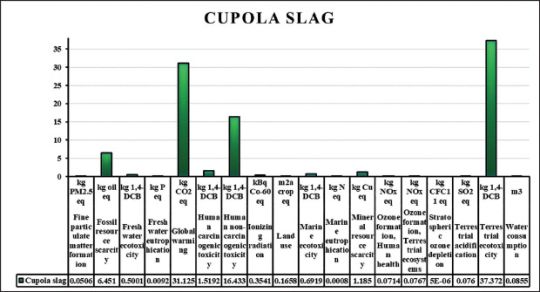
Figure 7. XRD Analysis.
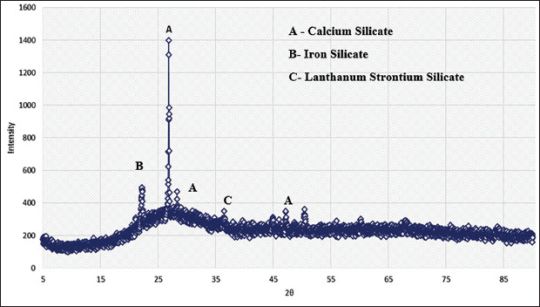
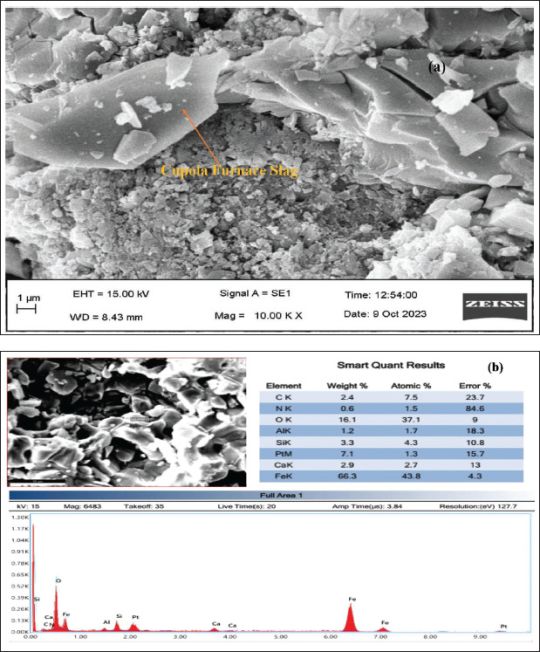
Figure 8. The result of (a) SEM and (b) EDX Analysis.
SEM and EDX Analysis
As presented in Figure 8, SEM and EDX were used to analyse the surface morphology and elemental composition of cupola slag. According to SEM, EDX and XRD results, granulated cupola slag has a homogeneous, amorphous structure with uniformly distributed oxides, while air-cooled cupola slag has a primarily crystalline structure dominated by iron oxide grains. Slow cooling and the uneven distribution of iron oxides and other mineral constituents are responsible for cupola slag’s crystalline nature. This results in the formation of distinct crystal phases and, as a result, lower pozzolanic reactivity when compared to other steel slags. Baricová et al. (2010) corroborated these findings by providing detailed morphological observations, which matched the patterns identified in other studies.
Case Study
This study assesses mineral wool cupola dust as a partial cement replacement and found that up to 15 wt. % of the milled micro-filler does not compromise 28-day strength. While unwashed dust caused 90-day strength loss due to chloride-induced Friedel’s salt, washing significantly reduced chloride content, resulting in improved long-term performance and a more stable cementitious matrix (Kubiliute et al., 2018).
The study showed that although raw cupola slag has a pozzolanic-like chemical composition, its inherent reactivity is low, but calcination at 700__degreesignC for 5 hours significantly improves its pozzolanic activity. With only a 13.5% strength reduction at 20% cement replacement, calcined cupola slag emerges as a viable and cost-effective partial substitute in regions where slag is readily available and cement is expensive (Aderibigbe & Ojobo, 1982).
Cupola slag improves the tensile strength, decreases water penetration, increases abrasion resistance at higher slag content, increases compressive strength by up to 30% when it is used as a replacement for fine aggregates at a lower water cement ratio (Waseem et al., 2021).
This study shows that while replacing coarse aggregate with cupola furnace slag (0%–50%) reduces density, increases porosity and lowers mechanical strength, slag-induced mineral formations allow up to 40% replacement to meet target strength, with SEM/EDS confirming weak gel development and overall concrete cost decreasing by 4.678% per m3 (Sikder et al., 2024).
General Discussion
Reusing cupola slag significantly lowers carbon emissions, industrial waste and dependence on natural resources, while landfill disposal has a global warming potential of approximately 31.12 kg CO2-equivalent per kilogramme. Therefore, using cupola slag as a partial substitute for cement and natural aggregates in concrete offers significant environmental and sustainability benefits. According to studies, cupola slag can reduce water penetration and improve durability, increase abrasion resistance at replacement levels by up to 40%, improve compressive and split tensile strength by up to 30%, and reduce concrete production costs by about 4.68% per cubic metre while still meeting strength requirements (Sikder et al., 2024). For the construction industry, cupola slag is a practical and sustainable substitute due to its cost savings and environmental benefits. Cupola slag adds new mineral compound phases (calcite, muscovite, albite and quartz) that support the development of strength, according to microstructural analysis. However, because it is crystalline, the aggregate-cement bond is weakened, increasing porosity and marginally decreasing mechanical durability at higher replacement levels. Despite this, cupola slag is a promising material for green building and circular economy projects because optimized substitution levels provide a balance between strength, durability and sustainability. Therefore, using cupola slag in concrete as a partial substitute for cement and natural aggregates not only lessens the environmental impact and carbon emissions but also increases cost effectiveness and encourages the use of sustainable materials in the building industry.
The primary drawbacks of using slag are its inherent chemical composition diversity, which is dependent on furnace charge, operating temperature and foundry processes. This causes inconsistent material performance and makes standardization difficult. Additionally, gaining full environmental certification necessitates more thorough long-term assessments, such as ecotoxicity evaluation, groundwater interaction studies and field-scale monitoring, even when preliminary leachability results may show conformity with primary regulations. Together, these elements restrict the immediate widespread use of slag-based products and emphasize the need for more comprehensive frameworks for certification and evaluation.
Conclusions
Cupola slag’s qualities as an additional cementitious material and its potential applications as fine and coarse aggregates have been carefully examined and experimentally examined. Studies have also looked into its LCA, leachability and hydraulic characteristics. The main conclusions drawn from these studies are outlined below:
Cupola slag is a practical and environmentally friendly substitute for fine aggregate in the manufacturing of concrete. Future research should maximize strength and durability by optimizing the replacement levels of cupola slag. Activation techniques should be investigated to increase its reactivity and evaluate resistance to environmental factors. Examining its application in 3D printing, geopolymers and structural applications may increase its potential. To guarantee both cost-effectiveness and safety, environmental and economic evaluations are crucial. Cupola slag’s status as a sustainable building alternative will be established through comparative research with other cementitious materials.
Acknowledgements
The authors acknowledge Mr Rajib Ghosh, Dy Engineer–Technical Service, Ramco Cement Ltd., India, for providing cement required for the research work.
Declaration of Conflicting Interests
The authors declared no potential conflicts of interest with respect to the research, authorship and/or publication of this article.
Funding
The authors disclosed receipt of the following financial support for the research, authorship, and/or publication of this article: This work was supported by the Department of Science & Technology and Biotechnology, Government of West Bengal, under the sanctioned project ‘Reuse of Cupola Slag – An Attempt to Sustainable Manufacturing’ (Memo No. 114 (Sanc.)/STBT–11012(16)/16/2021–ST SEC dated 27.08.2023), awarded to Jadavpur University.
ORCIDs
Rakesh Sikder https://orcid.org/0000-0001-8246-3719
Debasis Sau https://orcid.org/0000-0002-2508-6184
Soumyabrata Chakravarty https://orcid.org/0000-0002-3579-9161
Partha Haldar https://orcid.org/0000-0002-0659-5100
Titas Nandi https://orcid.org/0000-0002-4438-9973
Goutam Sutradhar https://orcid.org/0000-0002-4642-5341
Aderibigbe, D. A., & Ojobo, A. E. (1982). Properties of cupola slag as a pozzolana and its effects on partial replacement of cement in a mortar. Conservation & Recycling, 5(4), 203–208. https://doi.org/10.1016/0361-3658(82)90048-0
Agarwal, G., Hong K. S., Fletcher, M. R., & Speyer, R. F. (1991). Crystallization behavior of cupola slag glass-ceramics. Journal of Non-Crystalline Solids, 130(2), 187–197. https://doi.org/10.1016/0022-3093(91)90454-E
Ainie Mat Dom, A., Jamaluddin, N., Azlina Abdul Hamid, N., & Siok Hoon, C. (2022). A review: GGBS as a cement replacement in concrete. IOP Conference Series: Earth and Environmental Science, 1022(1), 012044. https://doi.org/10.1088/1755-1315/1022/1/012044
Alabi, S. A., & Afolayan, J. O. (n.d.). Investigation on the potentials of cupola furnace slag in concrete. International Journal of Integrated Engineering, 5(2).
Aristizábal, R. E., Pérez, P. A., Katz, S., & Bauer M. E. (2014). Studies of a quenched cupola. International Journal of Metalcasting, 8(3), 13–22. https://doi.org/10.1007/BF03355586
Balaraman, R., & Ligoria, S. A. (2015). Utilization of cupola slag in concrete as fine and coarse aggregate. International Journal of Civil Engineering and Technology, 6(8), 6–14.
Baricová, D. (2018). Recycling possibilities of the slag from cupola furnace. International Multidisciplinary Scientific GeoConference, 18(4.2), 137–144. https://doi.org/10.5593/sgem2018/4.2/S18.018
Baricová, D., Pribulová, A., & Demeter, P. (2010). Comparison of possibilities the blast furnace and cupola slag utilization by concrete production. Archives of Foundry Engineering, 10(2), 15–18.
Bhatt, A., Priyadarshini, S., Mohanakrishnan, A. A., Abri, A., Sattler, M., & Techapaphawit, S. (2019). Physical, chemical, and geotechnical properties of coal fly ash: A global review. Case Studies in Construction Materials, 11, e00263. https://doi.org/10.1016/j.cscm.2019.e00263
Chakravarty, S., Haldar, P., Nandi, T., & Sutradhar, G. (2023). Cupola slag reutilization for sustainable waste management: Review and economic analysis. International Journal of Environmental Science and Technology, 20(1), 1169–1184. https://doi.org/10.1007/s13762-021-03574-x
Chakravarty, S., Sikder, R., Haldar, P., Nandi, T., & Sutradhar, G. (2023a). Experimental investigation on feasibility of industrial waste to resource conversion for cupola slag. Results in Engineering, 17, 100962. https://doi.org/10.1016/j.rineng.2023.100962
Chakravarty, S., Sikder, R., Haldar, P., Nandi, T., & Sutradhar, G. (2023b). Machinability of cupola slag incorporated LM11 matrix composites in turning: Surface roughness and MRR analysis. Materials Today Communications, 37, 107414. https://doi.org/10.1016/j.mtcomm.2023.107414
Chakravarty, S., Sikder, R., Haldar, P., Nandi, T., & Sutradhar, G. (2024). Exploring energy aspects and tool wear on dry turning of cupola slag-reinforced aluminium metal matrix composites. Journal of the Brazilian Society of Mechanical Sciences and Engineering, 46(2), 59. https://doi.org/10.1007/s40430-023-04651-7
Cheah, C. B., Tan, L. E., & Ramli, M. (2021). Recent advances in slag-based binder and chemical activators derived from industrial by-products – A review. Construction and Building Materials, 272, 121657. https://doi.org/10.1016/j.conbuildmat.2020.121657
Gencel, O., Karadag, O., Oren, O. H., & Bilir, T. (2021). Steel slag and its applications in cement and concrete technology: A review. Construction and Building Materials, 283, 122783. https://doi.org/10.1016/j.conbuildmat.2021.122783
Indian Standards Institution. (1970). IS 383: Specification for coarse and fine aggregates from natural sources for concrete. New Delhi, India.
Kubiliute, R., Kaminskas, R., & Kazlauskaite, A. (2018). Mineral wool production waste as an additive for Portland cement. Cement and Concrete Composites, 88, 130–138. https://doi.org/10.1016/j.cemconcomp.2018.02.003
LCA Consequential. (2015). The ISO 14040 standards for consequential LCA.
Meshram, S. S., Raut, S. P., & Madurwar, M. V. (2022). Use of industrial waste burnt residue to develop sustainable brick. Materials Today: Proceedings, 60, 732–737. https://doi.org/10.1016/j.matpr.2022.02.336
Mistry, V. K., & Varia, D. J. (2020). Green concrete by replacing coarse aggregate with cupola slag for environmental protection. In Renewable Energy and Climate Change: Proceedings of REC 2019 (pp. 223–237).
Pribulova, A. (2018). Hydraulicity of metallurgical slags. 18th International Multidisciplinary Scientific GeoConference SGEM 2018, 18(4.2), 89–96. https://doi.org/10.5593/sgem2018/4.2/S18.012
Pribulová, A., Baricová, D., Futas, P., Pokusova, M., & Eperjesi, S. (2019). Cupola furnace slag: Its origin, properties and utilization. International Journal of Metalcasting, 13, 627–640.
Pribulová, A., Futáš, P., Petrík, J., Pokusová, M., Brzeziński, M., & Jakubski, J. (2018). Comparison of cupola furnace and blast furnace slags with respect to possibilities of their utilization. Archives of Metallurgy and Materials, 1865–1873. https://doi.org/10.24425/amm.2018.125117
Raja, R., & Kumar, S. (2023). Cupola slag as a green concrete-making material and its performance characteristics – A review. Renewable and Sustainable Energy Reviews, 185, 113573. https://doi.org/10.1016/j.rser.2023.113573
Rodrigues, P., Silvestre, J., Flores-Colen, I., Viegas, C., de Brito, J., Kurad, R., & Demertzi, M. (2017). Methodology for the assessment of the ecotoxicological potential of construction materials. Materials, 10(6), 649. https://doi.org/10.3390/ma10060649
Rodríguez-Mendoza, Y. E., Fuentes, A. F., & Escalante-García, J. I. (2012). Cementitious blends of Portland cement with calcium sulphate, fly ash and cupola slag. MRS Proceedings, 1488, imrc12-1488-07b–013. https://doi.org/10.1557/opl.2012.1541
Sikder, R., Chakravarty, S., Haldar, P., Nandi, T., & Sutradhar, G. (2023). Scope for cupola slag reuse in construction: A sustainable green solution. International Journal of Environmental Science and Technology, 20(6), 7019–7028. https://doi.org/10.1007/s13762-022-04257-x
Sikder, R., Chakravarty, S., Haldar, P., Nandi, T., Mandal, S., & Sutradhar, G. (2023). Cupola slag as partial replacement of coarse aggregate in concrete. Materials Today: Proceedings. https://doi.org/10.1016/j.matpr.2023.03.190
Sikder, R., Chakravarty, S., Sau, D., Haldar, P., Mandal, S., Nandi, T., & Sutradhar, G. (2024). Study of durability and mechanical properties for utilization of cupola slag as a coarse aggregate in M20 grade green concrete. Journal of Building Engineering, 87, 109101. https://doi.org/10.1016/j.jobe.2024.109101
Sikder, R., Chakravarty, S., Sau, D., Haldar, P., Mandal, S., Nandi, T., & Sutradhar, G. (2025). Utilization of cupola slag as fine aggregates in green concrete. In International Conference on Mechanical Engineering (pp. 131–143). Springer Nature. https://doi.org/10.1007/978-981-97-6667-3_11
Sosa, I., Tamayo, P., Sainz-Aja, J. A., Cimentada, A., Polanco, J. A., Setién, J., & Thomas, C. (2021). Viability of cupola slag as an alternative eco-binder and filler in concrete and mortars. Applied Sciences, 11(4), 1957. https://doi.org/10.3390/app11041957
Sosa, I., Thomas, C., Polanco, J. A., Setién, J., & Tamayo, P. (2020). High performance self-compacting concrete with electric arc furnace slag aggregate and cupola slag powder. Applied Sciences, 10(3), 773. https://doi.org/10.3390/app10030773
Statista Research Department. (n.d.). Casting production worldwide by country 2020. Statista.
Thomas, C., Sainz-Aja, J., Sosa, I., Setién, J., Polanco, J. A., & Cimentada, A. (2021). Physical-mechanical properties of cupola slag cement paste. Applied Sciences, 11(15), 7029.
Waseem, S. A., & Singh, B. (2016). Shear transfer strength of normal and high-strength recycled aggregate concrete – An experimental investigation. Construction and Building Materials, 125, 29–40. https://doi.org/10.1016/j.conbuildmat.2016.08.022
Waseem, S. A., Thakur, N., Islam, S. U., Kumar, M., & Saini, J. S. (2021). Cupola slag as partial replacement of fine aggregate in concrete – An experimental study. Journal of Building Engineering, 44, 103343. https://doi.org/10.1016/j.jobe.2021.103343
